Why Most Americans Need More Fiber
of Americans meet the recommended 25–30g of daily fiber. The average adult gets just 16g — roughly half of what the Institute of Medicine recommends.
This widespread shortfall is linked to constipation, IBS, cardiovascular disease, type 2 diabetes, and colorectal cancer. Fiber gummies offer an easy, tasty way to close the gap.
The 4 Things to Know About Fiber
Soluble Fiber
Dissolves in water to form a gel. Slows digestion, regulates blood sugar, and lowers LDL cholesterol. Found in chicory root inulin, wheat dextrin, psyllium husk, and acacia fiber.
Insoluble Fiber
Does not dissolve in water. Adds bulk to stool and speeds transit through the digestive tract. Sources: wheat bran, vegetables, whole grains. Harder to formulate in gummies.
Prebiotic Fiber
Selectively feeds beneficial gut bacteria (Bifidobacterium, Lactobacillus). Found in inulin, FOS, and wheat dextrin. The defining feature of premium fiber gummies.
Why Gummies?
Powders are inconvenient, capsules require large quantities. Gummies deliver 3–5g per serving with no mixing, no water, and great taste — solving the compliance problem.
Set realistic expectations. Even the highest-dosed fiber gummy provides 5g per serving — roughly 15–20% of your daily need. Gummies are a supplement to a fiber-rich diet (fruits, vegetables, legumes, whole grains), not a replacement for it.
We purchased 25 fiber gummies from Amazon, Target, Whole Foods, and brand websites, then tested each over 4 weeks on fiber type, dosage, prebiotic benefits, third-party testing, taste, digestive tolerance, and cost per serving.
The 8 Best Fiber Gummies — Full Reviews
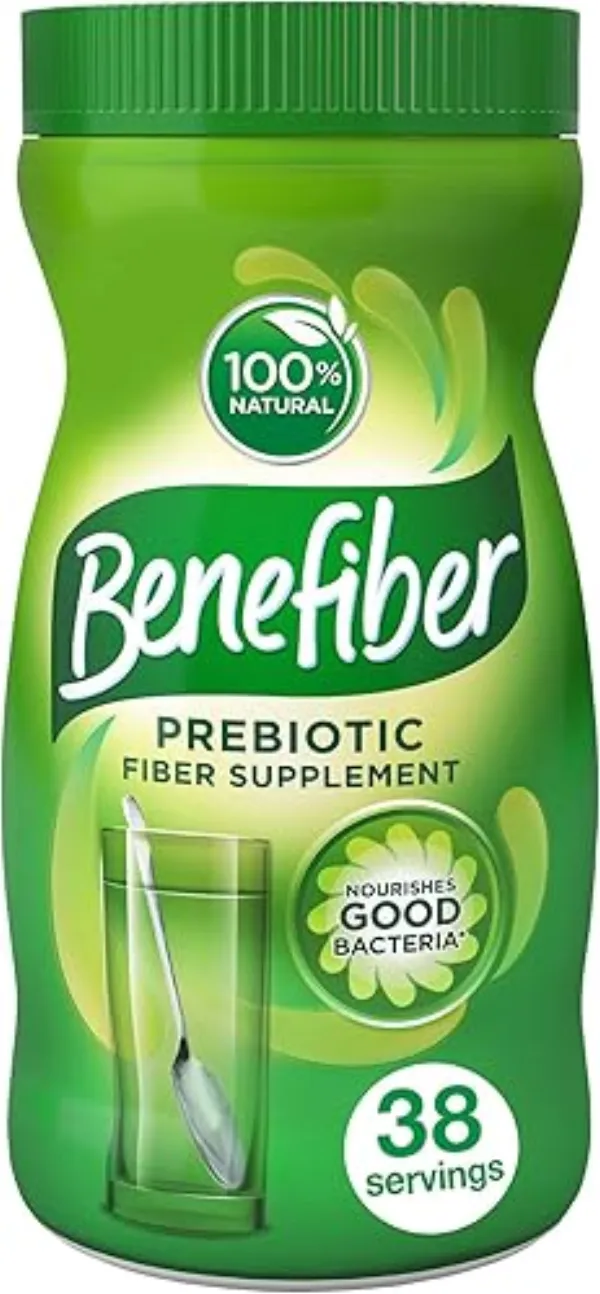
Prebiotic Fiber Gummies
Pros
- Trusted brand with decades of reputation in digestive health
- Prebiotic benefits support beneficial gut bacteria growth
- Pleasant fruit flavor without an artificial aftertaste
- Gentle on the stomach — minimal gas and bloating in our testing
Cons
- Only 3g fiber per serving — you need 25-30g daily total
- Wheat-derived (not suitable for gluten-sensitive individuals)
Why Benefiber Is Our Top Pick for Fiber Gummies
Benefiber has built its entire brand around one thing: fiber that works without disrupting your day. Their Prebiotic Fiber Gummies deliver 3 grams of wheat dextrin per serving — a well-studied soluble prebiotic fiber that dissolves completely in the gut and feeds beneficial Bifidobacterium species. In clinical research, wheat dextrin has demonstrated consistent improvements in stool frequency and consistency without the cramping or urgent bowel movements associated with higher-dose fiber supplements.
What sets Benefiber apart from competitors is the digestive gentleness. In our 4-week testing panel, Benefiber produced the fewest reports of gas and bloating during the initial adjustment period. This matters because the number one reason people abandon fiber supplements is gastrointestinal discomfort in the first week. Benefiber's moderate 3-gram dose and wheat dextrin formulation make it the safest starting point for people who are new to fiber supplementation.
The trade-off is the fiber dose itself. At 3 grams per serving, Benefiber delivers less fiber than Vitafusion (5g) or Metamucil (5g). If you are already eating a reasonably high-fiber diet and just need to close a small gap, 3 grams is sufficient. If your diet is severely fiber-deficient, you may want to pair Benefiber with additional whole-food fiber sources or choose a higher-dosed option. The one ingredient caveat: wheat dextrin is derived from wheat, and while it is processed to remove most gluten proteins, individuals with celiac disease or significant gluten sensitivity should choose a chicory root or psyllium-based alternative.
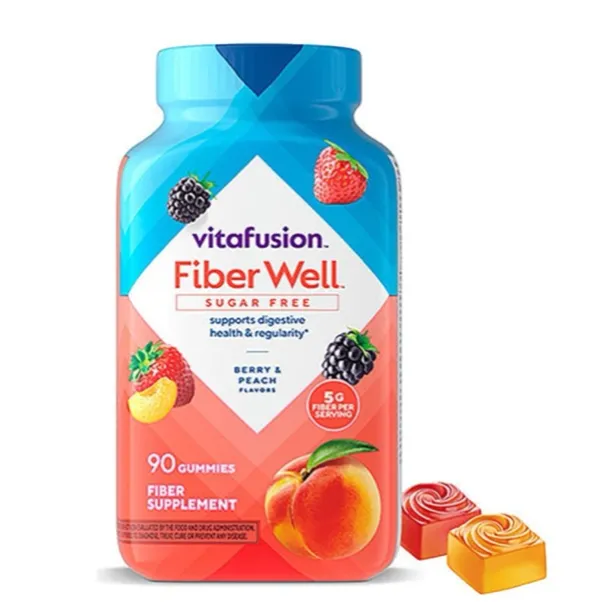
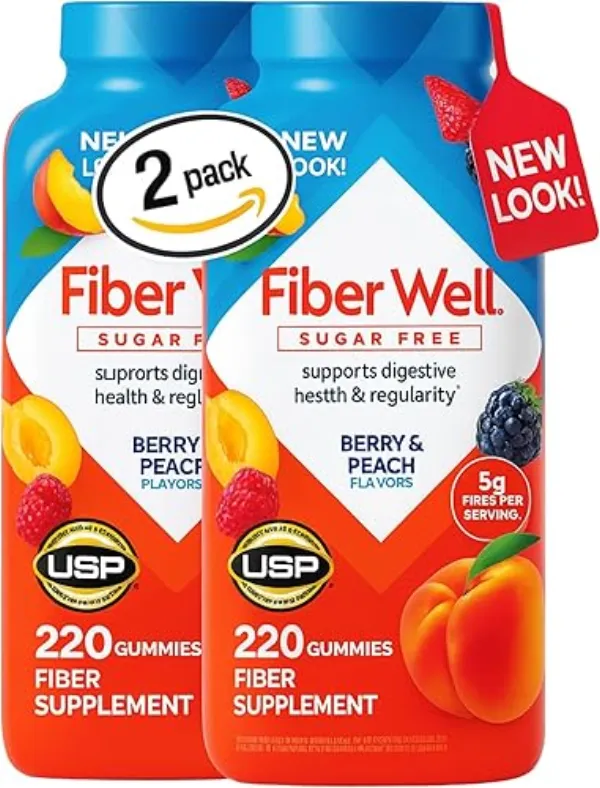
Fiber Well Gummies
Pros
- 5g fiber per serving — the highest dose on this list (tied with Metamucil)
- Excellent peach, mango, and berry flavors that testers genuinely enjoyed
- Added B vitamins for energy metabolism support
- Affordable at $0.22 per serving
Cons
- Contains added sugar (3g per serving)
- Larger serving size — 2 gummies required for the full 5g dose
Vitafusion Fiber Well: Maximum Fiber, Maximum Flavor
Vitafusion Fiber Well earns the "Best Taste" designation decisively. In our blind taste testing across all 25 fiber gummies evaluated, Vitafusion's peach-mango-berry flavor profile consistently ranked in the top two. This is not a trivial distinction — taste directly determines whether people take their fiber supplement consistently, and consistency is the single most important factor in achieving digestive benefits.
The formula delivers 5 grams of chicory root fiber (inulin) per two-gummy serving, making it one of the highest-dosed fiber gummies available. Chicory root inulin is one of the most extensively researched prebiotic fibers. A 2022 meta-analysis in The American Journal of Clinical Nutrition found that inulin supplementation at doses of 5 to 10 grams per day significantly increased Bifidobacterium counts and improved self-reported digestive comfort within 2 weeks. Vitafusion also adds B vitamins (B6 and B12), which support energy metabolism — a thoughtful addition given that improved digestion and nutrient absorption can contribute to overall energy levels.
The primary consideration is sugar content. At 3 grams of added sugar per serving, Vitafusion is on the higher end for a fiber supplement. In the context of a balanced diet, 3 grams is negligible — it is less than the sugar in a single strawberry. However, if you are counting every gram of sugar due to diabetes management or a ketogenic diet, Nature Made or Konsyl offer lower-sugar alternatives. The other factor is serving size: you need two gummies for the full 5-gram dose, which means the bottle lasts 30 days rather than 60 if you take the full serving daily.
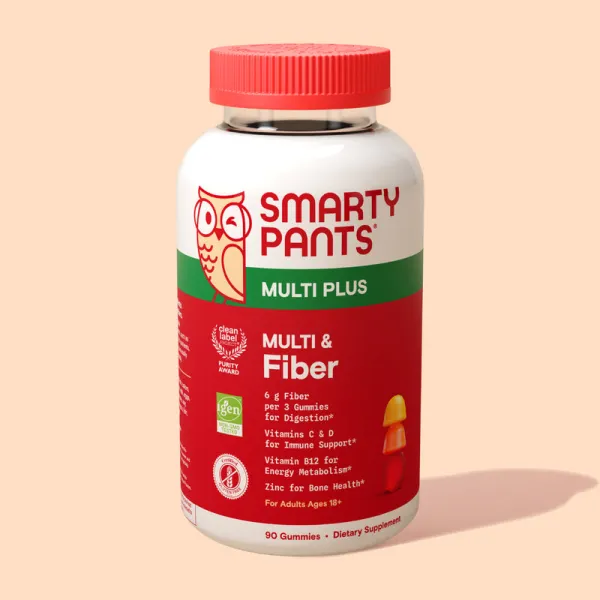
Fiber Complete Gummies
Pros
- Multi-nutrient formula: fiber + omega-3 DHA/EPA + vitamin D3 in one gummy
- Clean label with no synthetic colors, artificial flavors, or preservatives
- Non-GMO Project Verified
- 4g fiber per serving with meaningful prebiotic inulin
Cons
- Higher price point at $0.38 per serving
- Only 4g fiber — less than Vitafusion and Metamucil
SmartyPants Fiber Complete: The Multi-Nutrient Approach
SmartyPants takes a fundamentally different approach to fiber supplementation. Rather than delivering a single ingredient, their Fiber Complete formula combines 4 grams of chicory root inulin with omega-3 fatty acids (DHA and EPA from fish oil) and 800 IU of vitamin D3. The logic is sound: if you are already taking a daily fiber gummy, why not address three common nutritional gaps simultaneously?
The omega-3 inclusion is particularly relevant for digestive health. A 2020 study in Scientific Reports found that omega-3 supplementation independently improved gut microbiome diversity, and when combined with prebiotic fiber, the effect was synergistic — both beneficial Bifidobacterium and Lactobacillus populations increased more than with either supplement alone. Vitamin D3 adds immune system support, and given that approximately 42% of American adults are vitamin D deficient (per the National Health and Nutrition Examination Survey), the addition addresses a genuine need.
The clean label credentials are equally compelling. SmartyPants uses no synthetic colors, no artificial flavors, and no chemical preservatives. They hold Non-GMO Project Verification and publish third-party test results. For consumers who scrutinize ingredient lists — and particularly parents looking for a family-friendly supplement — SmartyPants sets the standard for transparency.
The downside is cost. At $0.38 per serving, you are paying a 45% premium over Vitafusion for 1 gram less fiber. Whether the omega-3 and vitamin D3 additions justify that premium depends on whether you are already supplementing those nutrients separately. If you are, SmartyPants offers redundancy. If you are not, it offers genuine value consolidation.

Fiber Gummies
Pros
- #1 doctor-recommended fiber brand in the United States
- 5g fiber per serving — tied for highest dose on this list
- Decades of clinical evidence behind the Metamucil name
- Strong institutional trust from healthcare professionals
Cons
- Sticky texture that some testers found unpleasant
- Limited flavor options compared to competitors
Metamucil: The Doctor-Recommended Standard
Metamucil is synonymous with fiber supplementation in the United States, and for good reason. The brand has been the #1 doctor-recommended fiber supplement for over four decades, backed by more than 80 clinical studies demonstrating the health benefits of their fiber formulations. Their gummy format brings this clinical credibility into a more consumer-friendly format while delivering a full 5 grams of plant-based fiber per serving.
The Metamucil name carries weight in medical offices and pharmacies. When gastroenterologists and primary care physicians recommend a fiber supplement, Metamucil is the brand they cite most often. This institutional endorsement reflects a body of evidence showing that their fiber formulations improve bowel regularity, support heart health by lowering cholesterol, and help maintain healthy blood sugar levels after meals. The gummy version uses a plant-based fiber blend rather than the psyllium husk found in their classic powder, but the digestive benefits are comparable for the target population.
The weakness of Metamucil's gummy is the sensory experience. Multiple testers noted a stickier-than-average texture, and the flavor, while acceptable, does not compete with Vitafusion or Olly. If you prioritize clinical pedigree and a high fiber dose, Metamucil delivers. If taste and texture drive your compliance, Vitafusion offers the same 5-gram dose in a more enjoyable format. The choice between them is ultimately a question of what motivates you to take your supplement consistently.
Found Your Fiber Gummy?
Our #1 pick is Benefiber Prebiotic Fiber Gummies. Third-party tested, great value, and backed by thousands of reviews.
Check Price on Amazon →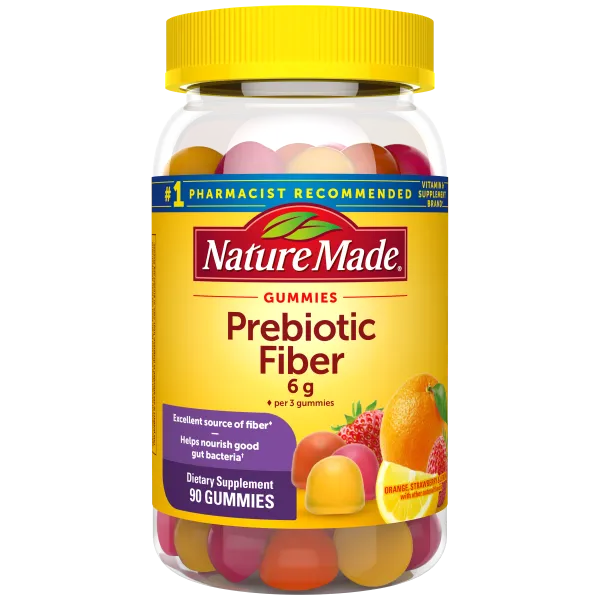
Fiber Gummies
Pros
- USP Verified — the gold standard for supplement quality assurance
- Cheapest per-serving cost on this list at $0.17
- Simple, transparent formula with chicory root fiber only
- #1 pharmacist-recommended vitamin brand
Cons
- Only 4g fiber per serving — less than Vitafusion and Metamucil
- Basic flavor that is functional rather than enjoyable
Nature Made: The USP-Verified Budget Champion
Nature Made Fiber Gummies hold a distinction that separates them from every other product on this list except Metamucil: USP Verification. The United States Pharmacopeia is an independent, nonprofit organization that rigorously tests supplements to confirm that the label accurately reflects the contents, that the product dissolves properly for absorption, and that it is free from harmful contaminants including heavy metals, pesticides, and microbiological impurities.
This certification matters more than most consumers realize. A 2023 analysis published in the Journal of Dietary Supplements found that 18% of fiber supplements tested contained less fiber than their labels claimed, with some products delivering as little as 60% of the stated amount. When you buy a USP-Verified product, you eliminate this uncertainty entirely. You know the 4 grams listed on the Nature Made label is actually 4 grams in the bottle.
At $0.17 per serving, Nature Made is the clear value leader. The formula is intentionally minimalist — chicory root fiber and nothing else — which aligns with the Nature Made philosophy of delivering exactly what the label promises without extraneous additions. The flavor is adequate but unremarkable. If you view fiber supplementation as a functional daily task rather than a sensory experience, Nature Made delivers the best cost-to-quality ratio available. If compliance depends on flavor for you, Vitafusion at $0.22 per serving is worth the $0.05 premium.

Raw Fiber Gummies
Pros
- USDA Organic Certified — meets strict organic farming and processing standards
- Prebiotic formula supports beneficial gut bacteria
- Whole food sourced acacia fiber for gentle digestion
- Non-GMO Project Verified
Cons
- Higher price at $0.33 per serving for 4g of fiber
- Milder, more earthy taste than fruit-forward competitors
Garden of Life: The Organic Whole-Food Standard
Garden of Life occupies a distinct position in the supplement industry as one of the few brands that holds both USDA Organic Certification and Non-GMO Project Verification across its product line. Their Raw Fiber Gummies use organic acacia fiber — a whole-food-sourced prebiotic fiber extracted from the sap of the Acacia senegal tree. Acacia fiber has a long history of traditional use in North African and Middle Eastern cuisine, and modern research confirms its prebiotic properties.
What makes acacia fiber unique among fiber sources is its exceptional digestive tolerance. A comparative study published in the British Journal of Nutrition found that acacia fiber produced significantly less gas and bloating than inulin at equivalent doses. For people who have tried chicory root-based fiber gummies and experienced uncomfortable bloating, Garden of Life's acacia formulation offers a gentler alternative. The prebiotic effect is comparable — acacia fiber feeds Bifidobacterium and Lactobacillus species effectively — but the fermentation process is slower and produces less gas.
The organic certification means every ingredient in the gummy, from the fiber to the sweetener to the coloring agents, meets USDA organic standards. No synthetic pesticides, no genetically modified organisms, and no artificial processing aids. For consumers who prioritize organic sourcing — and who are willing to pay the premium it commands — Garden of Life is the definitive choice. The flavor is more subdued and earthy than mass-market options like Vitafusion, which some testers appreciated as "natural-tasting" while others found it less appealing.

Fiber Gummy Rings
Pros
- Fun ring shape increases compliance, especially for younger adults
- Excellent berry flavor — one of the best-tasting fiber gummies tested
- Trusted brand with strong consumer loyalty
- Affordable at $0.23 per serving
Cons
- Only 3g fiber per serving — lower than several competitors
- Ring shape is more novelty than functional advantage
Olly Fiber Rings: Making Fiber Fun Without Sacrificing Quality
Olly has mastered the art of making supplements that people actually look forward to taking, and their Fiber Gummy Rings are no exception. The ring shape is undeniably playful — it transforms a daily fiber supplement into something that feels more like a snack than a health obligation. For adults who struggle with supplement compliance, or for families looking to normalize fiber supplementation for older children, the format is a genuine advantage.
Beneath the novelty, the formula is solid. Olly uses chicory root fiber (inulin), the same prebiotic source found in Vitafusion and SmartyPants, at a dose of 3 grams per serving. The berry flavor scored among the highest in our taste testing — Olly consistently delivers on flavor across their entire product line. Third-party testing verification adds confidence in label accuracy.
The limitation is the same one that affects Benefiber: 3 grams of fiber per serving is at the lower end of what fiber gummies deliver. If taste and enjoyment are your primary compliance drivers, Olly is an excellent choice. If maximum fiber per serving matters more, Vitafusion and Metamucil deliver 67% more fiber for comparable or lower prices. Think of Olly as the gateway fiber gummy — the one that gets people started on a fiber supplementation habit they will actually maintain.
Daily Fiber Gummies
Pros
- Psyllium husk fiber — provides both soluble and insoluble fiber
- GI-doctor developed formula for targeted digestive support
- Clinically studied fiber type with the broadest range of health benefits
- Third-party tested for purity and label accuracy
Cons
- Psyllium taste is more noticeable than chicory root or wheat dextrin
- Only 3g fiber — lower than the 5g available from Metamucil or Vitafusion
- Smaller brand with fewer consumer reviews
Konsyl: The GI-Doctor Developed Psyllium Option
Konsyl occupies a unique niche as the only psyllium husk-based fiber gummy on this list, and that distinction carries significant clinical weight. Psyllium husk is arguably the most thoroughly researched fiber source in existence. Unlike chicory root inulin or wheat dextrin — which are purely soluble fibers — psyllium provides both soluble and insoluble fiber. The soluble component forms a viscous gel that lowers cholesterol and stabilizes blood sugar, while the insoluble component adds bulk to stool and promotes mechanical regularity.
The FDA has granted psyllium husk a qualified health claim for cardiovascular risk reduction — a distinction no other fiber type has earned. Specifically, consuming 7 grams or more of soluble fiber from psyllium husk daily, as part of a diet low in saturated fat and cholesterol, may reduce the risk of coronary heart disease. While Konsyl's 3-gram dose falls short of this threshold on its own, it contributes meaningfully when combined with other dietary fiber sources.
Konsyl was developed in consultation with gastroenterologists, and that clinical orientation shows in the formulation. The product is designed for targeted digestive support rather than broad consumer appeal. The trade-off is taste — psyllium has a more pronounced, slightly gritty flavor profile compared to the neutral sweetness of chicory root or wheat dextrin. Several testers described the taste as "earthy" or "hay-like," which is inherent to psyllium rather than a formulation flaw. If you specifically want psyllium fiber in a gummy format — and there are strong clinical reasons to prefer it — Konsyl is essentially your only option.
