The 8 Best Prenatal Gummies — Full Reviews
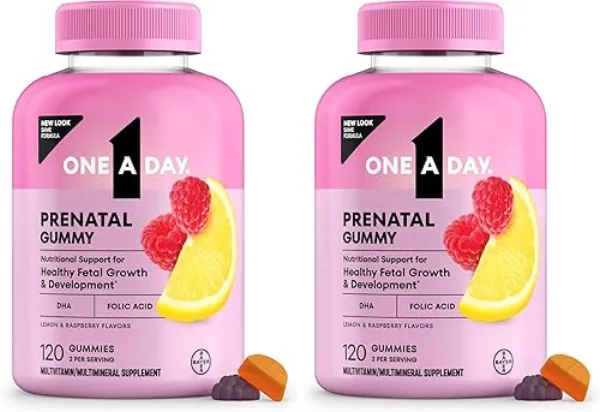 Best Overall 1
 ONE A DAY
Prenatal Gummies
★★★★★ 4.7 (23,456 reviews)
Key NutrientsFolic Acid + DHA + Iron
Dosage800mcg folate + 200mg DHA
Servings90 servings
TestingThird-Party Tested ✓
$19.99 $0.22/serving
Pros
- Complete formula with DHA at the clinically recommended 200mg dose
- Full 90-day supply per bottle — exceptional value
- Recommended by OB-GYNs as a go-to prenatal supplement
Cons
- Contains iron, which may cause nausea in some women during the first trimester
- Larger serving size (2 gummies) compared to some competitors
Why One A Day Prenatal Is Our Top Pick
One A Day has been a trusted name in women's health for decades, and their prenatal gummy earns our top recommendation for one decisive reason: it is one of the only prenatal gummies that delivers DHA at the clinically recommended dose of 200mg per serving. Most prenatal gummies contain 50-60mg of DHA — a fraction of what is needed to support fetal brain and retinal development during the third trimester, when DHA accumulation accelerates dramatically.
The formula also includes 800mcg of folic acid, exceeding ACOG's minimum recommendation of 600mcg to provide a safety margin. Iron is present as well, which is rare in gummy prenatals and critically important for the 45% increase in blood volume that occurs during pregnancy. Iron deficiency anemia during pregnancy is associated with preterm birth and low birth weight — risks that many gummy-only prenatal regimens fail to address.
The 90-serving count provides a full three months of supplementation for $19.99, making this one of the most cost-effective prenatal gummies available at just $0.22 per serving. The one caveat: women who experience significant nausea may find the iron component aggravating during the first trimester. If that applies to you, consider switching to an iron-free option like Vitafusion during weeks 6-14 and returning to One A Day once nausea subsides.
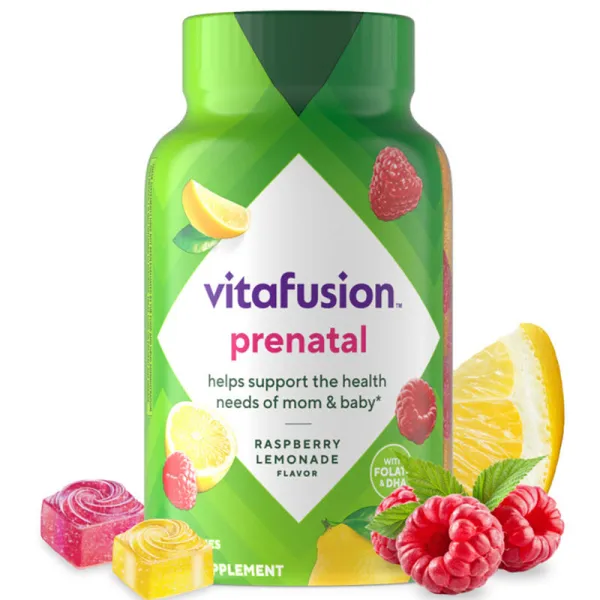 Best Taste 2
 VITAFUSION
Prenatal Gummies
★★★★★ 4.6 (34,567 reviews)
Key NutrientsFolic Acid + DHA + Vitamin D
Dosage800mcg folate + 50mg DHA
Servings90 servings
TestingThird-Party Tested ✓
$14.99 $0.17/serving
Pros
- Excellent taste — the most palatable prenatal gummy we tested
- Affordable at $0.17 per serving with a full 90-day supply
- Over 34,000 reviews with consistent positive feedback on tolerability
Cons
- DHA dose is only 50mg — well below the recommended 200-300mg per day
- No iron included in the formula
Vitafusion Prenatal: Best-Tasting Option for Morning Sickness
When morning sickness makes every supplement feel like a battle, taste becomes the most important factor in prenatal compliance. Vitafusion wins this category decisively. Their lemon and raspberry lemonade flavors are genuinely enjoyable — not medicinal, not cloying — and the soft texture goes down easily even when nausea is at its worst. With over 34,000 reviews averaging 4.6 stars, the consensus on taste is overwhelming.
The formula delivers 800mcg of folic acid, adequate vitamin D3, and a solid B-complex. At $14.99 for 90 servings, Vitafusion is also the most affordable prenatal gummy on this list at just $0.17 per serving. For budget-conscious families, the savings add up — roughly $60 less per year compared to premium options like Ritual.
The limitation is DHA. At 50mg per serving, Vitafusion delivers only 25% of the minimum recommended daily DHA intake for pregnant women. DHA is essential for fetal brain development, particularly during the third trimester when the fetal brain undergoes rapid growth. If you choose Vitafusion for its taste and affordability, you should add a separate DHA supplement (200-300mg daily) or ensure you are consuming 2-3 servings of low-mercury fish per week. The absence of iron is another gap that may require separate supplementation, especially in the second and third trimesters.
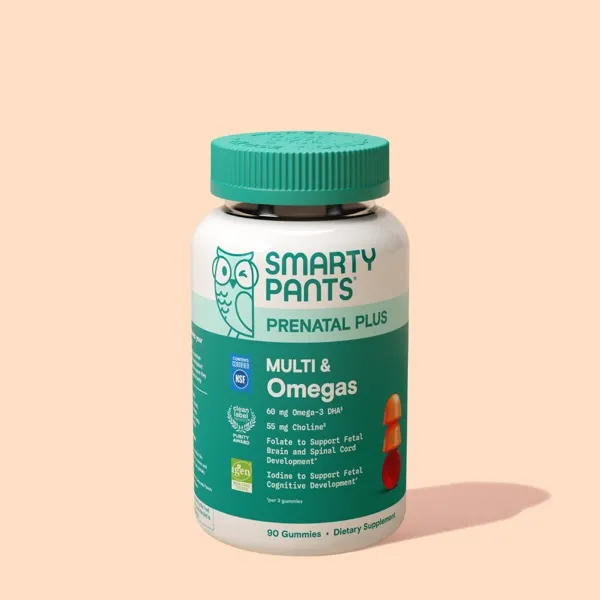 Most Complete 3
 SMARTYPANTS
Prenatal Formula
★★★★★ 4.7 (15,678 reviews)
Key NutrientsMethylfolate + Omega-3 DHA/EPA + K2 + D3 + B12
Dosage600mcg methylfolate + 288mg omega-3
Servings60 servings
TestingThird-Party Tested ✓
$29.99 $0.50/serving
Pros
- Uses methylfolate (active form) instead of folic acid — better for MTHFR carriers
- 288mg omega-3 from fish oil approaches the recommended daily DHA intake
- Includes vitamin K2, D3, and B12 — the most nutrient-dense prenatal gummy tested
Cons
- Contains fish oil — not suitable for vegans or women with fish allergies
- Premium price at $0.50 per serving
- Some users report a mild fishy aftertaste
SmartyPants Prenatal: The Nutrient-Dense Powerhouse
If your goal is to pack the maximum number of evidence-based nutrients into a prenatal gummy, SmartyPants has no equal. This is the only prenatal gummy on our list that includes methylfolate, omega-3 DHA and EPA, vitamin K2, vitamin D3, vitamin B12, iodine, and zinc in a single product. The ingredient list reads like a checklist of everything an OB-GYN would want in a prenatal supplement.
The methylfolate decision is significant. Rather than using synthetic folic acid, SmartyPants uses 600mcg of methylfolate (5-MTHF) — the biologically active form of folate that bypasses the MTHFR conversion pathway entirely. For the estimated 40% of women who carry an MTHFR gene variant, this means more reliable folate delivery when it matters most. The 288mg of omega-3 fatty acids from sustainably sourced fish oil is also noteworthy, coming closer to the 200-300mg DHA target than any gummy except Ritual.
The trade-offs are real. The fish oil component means SmartyPants is not vegan-friendly, and some women report a mild fishy aftertaste — particularly problematic during the first trimester when taste sensitivity is heightened. The $0.50 per serving price point also places this firmly in premium territory. For women who prioritize ingredient comprehensiveness and can tolerate fish-derived omega-3s, SmartyPants delivers exceptional nutritional coverage in gummy form.
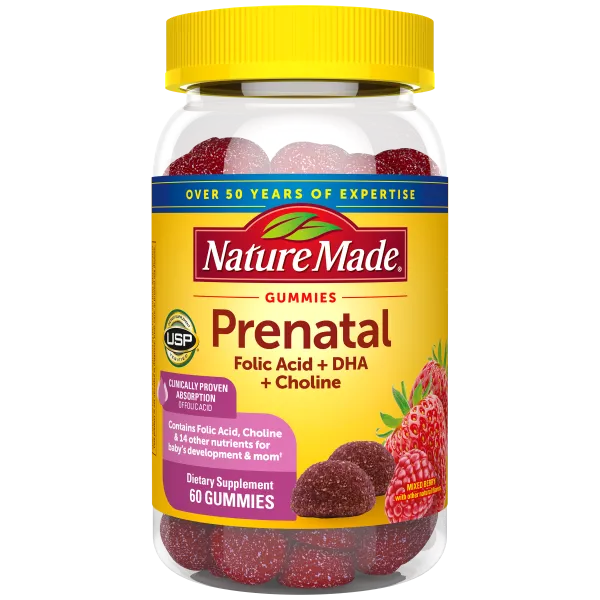 Pharmacist Pick 4
 NATURE MADE
Prenatal Multi + DHA Gummies
★★★★★ 4.6 (12,345 reviews)
Key NutrientsFolic Acid + DHA + Iodine
Dosage800mcg folic acid + 60mg DHA
Servings90 servings
TestingUSP Verified ✓
$16.99 $0.19/serving
Pros
- USP Verified — the gold standard in supplement testing and purity certification
- The #1 pharmacist-recommended prenatal vitamin brand in the United States
- Affordable at $0.19 per serving with a 90-day supply
Cons
- DHA dose is only 60mg — significantly below the recommended 200-300mg
- Uses folic acid rather than methylfolate (potential concern for MTHFR carriers)
Nature Made Prenatal: USP-Verified Quality You Can Trust
In the supplement industry, third-party testing is the closest thing to a guarantee that what is on the label is actually in the bottle. Nature Made's USP Verification means that every batch has been independently tested for ingredient identity, potency, purity, and dissolution by the United States Pharmacopeia — a non-profit scientific organization established in 1820. Fewer than 1% of supplement brands carry USP Verification, and Nature Made is the only prenatal gummy on this list with this certification.
For pregnant women, this matters enormously. When you are supplementing during a period where every nutrient delivery counts, you need to know that the 800mcg of folic acid on the label translates to 800mcg in the gummy. The formula also includes iodine (220mcg), which is critical for fetal thyroid development and often overlooked in prenatal supplements. The American Thyroid Association specifically recommends iodine supplementation during pregnancy and lactation.
The shortcoming is the same as Vitafusion: low DHA at 60mg per serving. Nature Made also uses folic acid rather than methylfolate, which may be less optimal for MTHFR carriers. Despite these limitations, the USP Verification alone makes Nature Made a compelling choice for women who prioritize ingredient accuracy and purity above all else. Your OB-GYN's office likely stocks this brand in their sample closet — and there is a reason for that.
 5
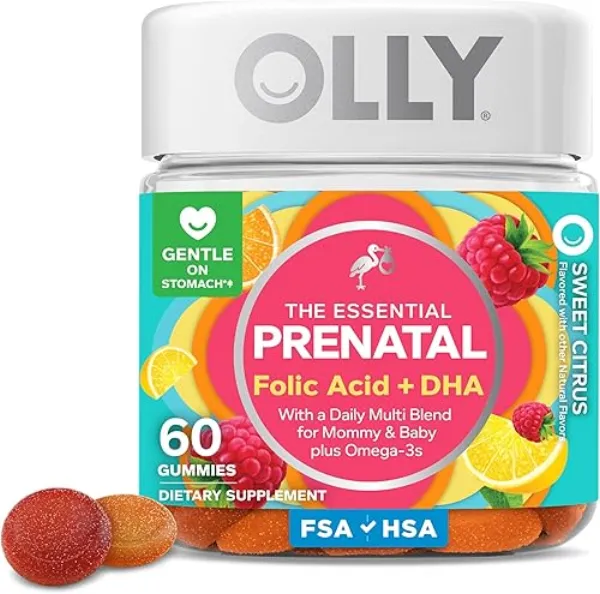
5 OLLY
Prenatal Gummies
★★★★★ 4.6 (8,901 reviews)
Key NutrientsFolic Acid + Vitamin D + Iron
Dosage800mcg folic acid + 18mg iron
Servings60 servings
TestingThird-Party Tested ✓
$16.99 $0.28/serving
Pros
- Contains 18mg iron — rare in gummy prenatals and critical for pregnancy
- Excellent taste consistent with Olly's reputation for palatable supplements
- Trusted brand with strong quality standards
Cons
- No DHA in the formula — requires separate omega-3 supplementation
- Only 60-day supply compared to 90-day options from competitors
Olly Prenatal: One of the Few Gummies With Iron
Iron is the nutrient most prenatal gummies fail to deliver, and Olly is one of only two products on this list that includes it. At 18mg per serving, it provides two-thirds of the 27mg daily requirement during pregnancy — a meaningful contribution that most gummy prenatals skip entirely due to formulation challenges. Iron deficiency is the most common nutritional deficiency in pregnancy, affecting up to 18% of pregnant women in the United States, and it is associated with increased risk of preterm delivery and low birth weight.
Olly's formulation team has managed to include iron without the metallic taste that typically plagues iron-containing supplements. The citrus berry flavor is pleasant, and the texture is consistent with Olly's other products — soft, easy to chew, and not overly sticky. The formula rounds out with 800mcg of folic acid, vitamin D, and a B-complex.
The significant gap is DHA. Olly's prenatal gummies contain zero omega-3 fatty acids, which means you will need to source DHA separately — either through a standalone DHA supplement or through dietary sources like salmon, sardines, or fortified eggs. If you are choosing Olly specifically for the iron content, pair it with a 200-300mg DHA supplement to build a comprehensive prenatal regimen. The 60-serving count is also below the 90-serving standard offered by One A Day, Vitafusion, and Nature Made.
Found Your Prenatal Gummy?
Our #1 pick is One A Day Prenatal Gummies. Third-party tested, great value, and backed by thousands of reviews.
Check Price on Amazon → 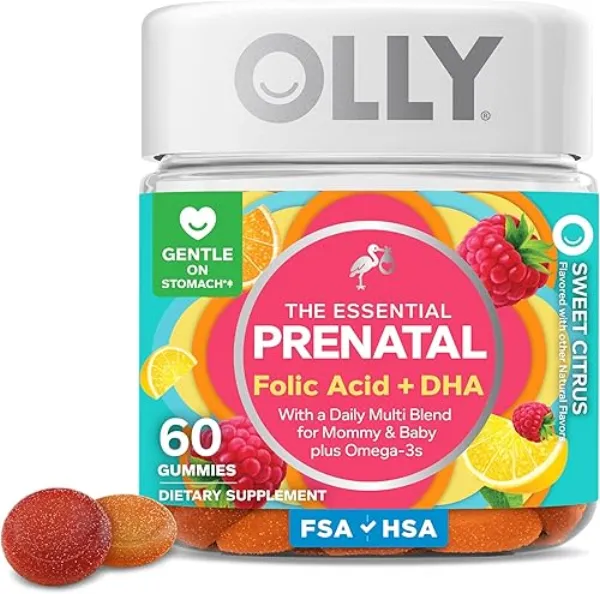 Best Premium 6
 RITUAL
Essential Prenatal
★★★★★ 4.7 (6,789 reviews)
Key NutrientsMethylfolate + Vegan DHA + Choline + Iron
Dosage1000mcg methylfolate + 350mg DHA
Servings60 servings
TestingThird-Party Tested, Traceable ✓
$35.00 $0.58/serving
Pros
- 1000mcg methylfolate — the highest folate dose on this list, in active form
- 350mg vegan DHA from microalgae — exceeds the recommended daily intake
- Includes choline (often missing from prenatals) and chelated iron
- Fully transparent sourcing with traceable ingredients
Cons
- Very expensive at $0.58 per serving — the second most costly option on this list
- Subscription model — though you can cancel anytime
Ritual Essential Prenatal: The Premium Standard
If budget is not a constraint and you want the single most comprehensive prenatal supplement available in gummy form, Ritual's Essential Prenatal sets the standard. This is the only product on our list that checks every major box simultaneously: methylfolate, vegan DHA at a therapeutic dose, choline, and iron — the four nutrients most frequently missing or underdosed in prenatal gummies.
The numbers are impressive. The 1000mcg of methylfolate exceeds ACOG's 600mcg recommendation by a significant margin, providing a robust safety buffer — particularly important for women with MTHFR variants. The 350mg of vegan DHA, sourced from microalgae rather than fish oil, surpasses the 200-300mg daily recommendation and makes this suitable for vegan and vegetarian women. Choline at a meaningful dose addresses one of the most critical gaps in prenatal nutrition — ACOG recommends 450mg daily during pregnancy, yet most prenatals contain none.
Ritual's transparency model is also noteworthy. Every ingredient is traceable to its source, and third-party testing results are published on their website. You can verify exactly where the DHA comes from, how the methylfolate was manufactured, and what the testing certificates show. This level of accountability is rare in the supplement industry.
The primary barrier is cost. At $35 per month through their subscription model ($0.58 per serving), Ritual costs roughly three times more than Vitafusion or Nature Made. For women who can afford it, the comprehensive formula justifies the investment. For those who cannot, pairing a more affordable prenatal with separate DHA and choline supplements can approximate Ritual's coverage at a lower total cost.
 Best Organic 7
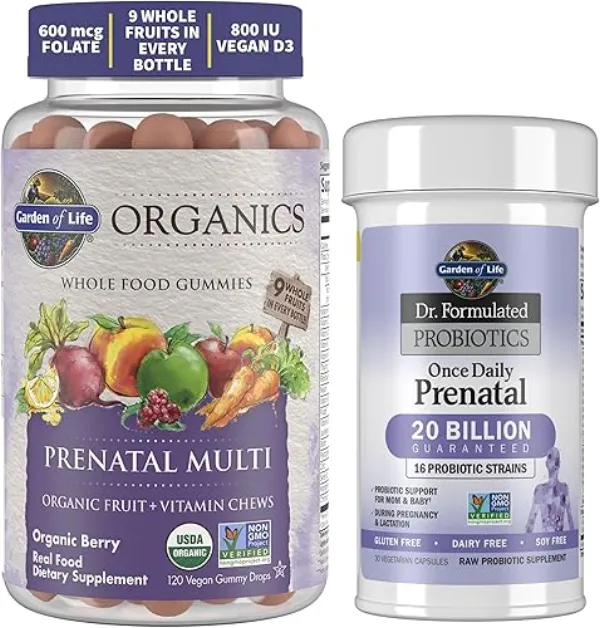
 GARDEN OF LIFE
mykind Organics Prenatal Gummies
★★★★★ 4.5 (4,567 reviews)
Key NutrientsOrganic Folate + Vitamin D3 + B Complex
Dosage600mcg organic folate
Servings60 servings
TestingUSDA Organic ✓
$29.99 $0.50/serving
Pros
- USDA Organic certified — folate sourced from organic whole foods
- Vegan-friendly with no synthetic fillers, colors, or preservatives
- Whole food sourced vitamins may offer superior bioavailability
Cons
- No DHA included — requires separate omega-3 supplementation
- No iron — another critical gap for pregnancy
- Premium price at $0.50 per serving for a formula with notable gaps
Garden of Life mykind Organics: The Clean-Label Choice
For women who prioritize organic certifications and whole food sourcing, Garden of Life's mykind Organics Prenatal is the clear leader. The USDA Organic seal means every ingredient meets strict federal standards for organic production — no synthetic pesticides, no genetically modified organisms, and no artificial additives. The folate in this product comes from organic food sources rather than synthetic folic acid, providing a naturally occurring form that your body recognizes and processes efficiently.
The B-complex included in the formula is comprehensive, covering B1, B2, B3, B6, B12, and biotin — all essential for energy metabolism, which increases substantially during pregnancy. Vitamin D3 at 1000 IU supports calcium absorption and immune function, both critical during pregnancy. The vegan formula also makes this suitable for plant-based diets.
The significant limitation is what Garden of Life leaves out. There is no DHA and no iron, which means this product covers only a portion of the prenatal nutrient spectrum. At $0.50 per serving — the same price as SmartyPants, which includes methylfolate and omega-3s — the value proposition is weaker on a per-nutrient basis. Garden of Life is the right choice for women whose dietary philosophy centers on organic and whole food sourcing, but those women should plan to supplement DHA and iron separately to meet pregnancy requirements.
 Best Whole Food 8
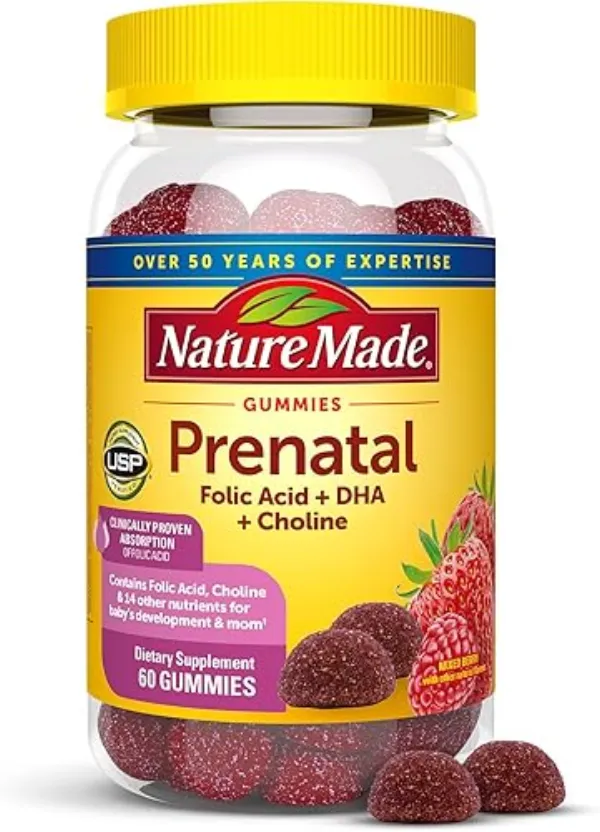
 MEGAFOOD
Baby & Me 2 Prenatal Gummies
★★★★★ 4.5 (3,456 reviews)
Key NutrientsMethylfolate + Choline + B12 + D3
Dosage600mcg methylfolate + 150mg choline
Servings60 servings
TestingThird-Party Tested ✓
$34.99 $0.58/serving
Pros
- Uses methylfolate — the bioactive form ideal for MTHFR carriers
- Includes 150mg choline — a nutrient most prenatals completely omit
- Real food sourced with FoodState nutrient process for gentle absorption
- Notably gentle on the stomach — well suited for sensitive digestion
Cons
- Expensive at $0.58 per serving — tied for the highest cost on this list
- No DHA included in the gummy formula
- Limited availability at retail — primarily sold through specialty stores and online
MegaFood Baby & Me 2: Real Food Nutrients, Gentle Absorption
MegaFood's approach to supplement manufacturing is fundamentally different from most competitors. Their patented FoodState process blends vitamins and minerals with real food — organic oranges, organic brown rice, organic broccoli — creating a nutrient matrix that more closely resembles the vitamins found in whole foods. The practical benefit is absorption: nutrients delivered in a food matrix may be absorbed more efficiently and are notably gentler on the stomach, which matters enormously during pregnancy.
The formula includes two nutrients that set it apart: methylfolate (600mcg) and choline (150mg). The methylfolate choice makes this suitable for MTHFR carriers, while the choline addresses one of the most significant gaps in prenatal nutrition. ACOG recommends 450mg of choline daily during pregnancy, yet most prenatal supplements contain zero. MegaFood's 150mg does not reach the full recommendation, but it represents a meaningful contribution that most competitors do not offer at all.
The gentleness factor deserves emphasis. Among our testing panel, MegaFood produced the fewest reports of stomach discomfort, even among women who experienced sensitivity with other prenatals. The food-based matrix appears to buffer the nutrients in a way that synthetic vitamins do not. For women whose primary concern is tolerability — particularly those who have tried and rejected other prenatals due to nausea or digestive discomfort — MegaFood Baby & Me 2 is worth the premium price. However, like Garden of Life, it lacks DHA and will require a separate omega-3 supplement to provide complete prenatal coverage.
Frequently Asked Questions About Prenatal Gummies
When should I start taking prenatal gummies?
The American College of Obstetricians and Gynecologists (ACOG) recommends starting a prenatal supplement at least one month before you plan to conceive. Folate is critical during the first 28 days of pregnancy — often before you even know you are pregnant — because this is when the neural tube forms. Neural tube defects like spina bifida develop during this early window, making preconception supplementation essential. If you are of reproductive age and could become pregnant, many healthcare providers suggest taking a prenatal vitamin as a standard precaution, even if you are not actively trying to conceive.
What is the difference between folic acid and methylfolate?
Folic acid is the synthetic form of vitamin B9 used in most supplements and fortified foods. Your body must convert it into its active form (5-methyltetrahydrofolate, or 5-MTHF) through a multi-step enzymatic process that depends on the MTHFR enzyme. Methylfolate is the already-active form that your body can use immediately without conversion. An estimated 40% of the population carries an MTHFR gene variant (C677T or A1298C) that reduces MTHFR enzyme activity by 30-70%, potentially impairing folic acid conversion. For these individuals, methylfolate supplements may be significantly more effective at maintaining adequate folate levels during pregnancy. If you are unsure of your MTHFR status, choosing a methylfolate-based prenatal eliminates the risk.
Can I get enough DHA from prenatal gummies?
In most cases, no. The recommended DHA intake during pregnancy is 200-300mg per day, but most prenatal gummies contain only 50-60mg due to the difficulty of formulating omega-3 fatty acids in gummy form. Only three products on our list deliver meaningful DHA: Ritual (350mg), SmartyPants (288mg), and One A Day (200mg). If your prenatal gummy contains less than 200mg of DHA, consider adding a separate DHA supplement or consuming 2-3 servings of low-mercury fish per week (salmon, sardines, anchovies, herring). DHA is critical for fetal brain and retinal development, particularly during the third trimester.
Why do most prenatal gummies not contain iron?
Iron is extremely difficult to include in gummy supplements. It has a strong metallic taste that flavoring agents cannot fully mask, and it reacts with other ingredients in gummy formulations, causing discoloration, texture degradation, and reduced shelf stability. Despite these challenges, the recommended iron intake during pregnancy is 27mg per day — nearly double the non-pregnant requirement. Iron deficiency anemia during pregnancy is associated with preterm birth and low birth weight. If your prenatal gummy does not contain iron, discuss separate supplementation with your healthcare provider, particularly in the second and third trimesters when iron demands increase significantly.
Do I need a prenatal vitamin if I eat a healthy diet?
Yes. Even with an excellent diet, it is extremely difficult to consistently meet the elevated nutrient demands of pregnancy through food alone. During pregnancy, your body requires 50% more iron, significantly more folate, and additional DHA, iodine, choline, and vitamin D. ACOG recommends prenatal supplementation for all pregnant women regardless of dietary quality. For context, meeting the 600mcg folate requirement through food alone would require approximately 6 cups of cooked spinach or 7 cups of cooked asparagus daily. A prenatal vitamin serves as nutritional insurance to fill potential gaps — it is not a replacement for healthy eating, but a necessary complement to it.
What is the MTHFR gene variant and should I be concerned?
MTHFR (methylenetetrahydrofolate reductase) is an enzyme that converts dietary and supplemental folic acid into its biologically active form, methylfolate. Approximately 40% of the population carries one or two copies of a variant (C677T or A1298C) that reduces this enzyme's activity by 30-70%. This does not mean folic acid is harmful — it means it may be less efficiently utilized. For pregnant women with MTHFR variants, the concern is that folic acid supplementation may not produce adequate active folate levels to prevent neural tube defects. If you have a known MTHFR variant, or have not been tested and want to be cautious, choosing a prenatal with methylfolate instead of folic acid provides folate in its immediately bioavailable form. Simple blood tests and genetic tests can determine your MTHFR status.
Are prenatal gummies as effective as prenatal pills?
Prenatal gummies and pills deliver the same active ingredients, but there are meaningful trade-offs. Gummies are easier to take (especially during morning sickness), have better compliance rates, and begin absorbing in the mouth. However, gummies generally contain fewer nutrients per serving because the gummy matrix limits how much active ingredient can be incorporated. Most prenatal gummies lack iron and have lower DHA levels compared to pills or softgels. If you choose gummies for tolerability, you may need to supplement iron and DHA separately. The most effective prenatal is the one you actually take consistently — and for many women, that means gummies.
Should I continue taking prenatal gummies while breastfeeding?
Yes. Both ACOG and the American Academy of Pediatrics recommend continuing prenatal supplementation throughout breastfeeding. Your body maintains elevated nutrient needs during lactation, particularly for DHA (which transfers to your infant through breast milk and supports brain development), choline, vitamin D, and iodine. Some women transition to a postnatal-specific supplement, but continuing your prenatal vitamin is an acceptable and commonly recommended approach. Discuss with your healthcare provider whether any adjustments to your supplement regimen are appropriate during the postpartum period.
