Should You Take CoQ10 With Food?
Short answer: yes, always — and specifically with food containing fat. CoQ10 is fat-soluble, and taking it with dietary fat can increase absorption by up to 300%. This guide covers the science, optimal food pairings, and how to get the most from every dose.
Quick answer: Always take CoQ10 with food containing fat. A 2018 study in the Journal of Clinical Pharmacy and Therapeutics found fat-containing meals increase CoQ10 bioavailability by up to 300% compared to an empty stomach. Even 5-10g of fat (half an avocado, 2 eggs, 1 tbsp olive oil) is enough.
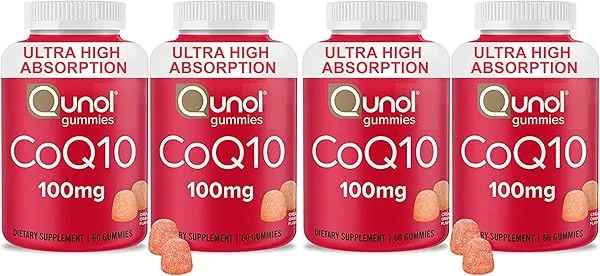
Qunol
Qunol CoQ10 Gummies — Water-Soluble 100mg
Patented water-soluble formula delivers 3x better absorption even with light breakfasts. Two gummies with eggs or yogurt and you're done. $0.50/day.
Check Price on AmazonDisclosure: We may earn a commission when you purchase through our links, at no extra cost to you. Our recommendations are based on editorial research and publicly available information. Full disclosure.
Prices and availability: Product prices and availability shown are accurate as of the date of publication and are subject to change. Any price and availability information displayed on Amazon.com at the time of purchase will apply.
Why CoQ10 Needs Fat to Work
CoQ10 is a lipophilic (fat-loving) molecule. Its chemical structure includes a long isoprenoid tail that makes it insoluble in water but highly soluble in fats and oils. This chemistry dictates how your body absorbs it: CoQ10 cannot cross your intestinal wall as a free molecule. Instead, it must be packaged into micelles — tiny spherical structures formed by bile acids and dietary fats in the small intestine. Without fat in your meal, no micelles form, and CoQ10 passes through your digestive tract largely unabsorbed.
A 2018 study in the Journal of Clinical Pharmacy and Therapeutics measured plasma CoQ10 levels after identical 200mg doses taken (a) on an empty stomach, (b) with a low-fat breakfast, and (c) with a high-fat breakfast. The high-fat group showed 3x higher peak blood levels than the empty-stomach group — making the difference between a working supplement and an expensive placebo.
Journal of Clinical Pharmacy and Therapeutics, 2018 — CoQ10 bioavailability with foodEating fat triggers your gallbladder to release bile — bile acts as an emulsifier that breaks up fat droplets and carries CoQ10 into absorbable micelles.
Micelles are microscopic "transport vehicles" that ferry fat-soluble molecules (CoQ10, vitamins A, D, E, K) from your gut into your bloodstream.
Research shows at least 3-5 grams of dietary fat is needed to meaningfully improve CoQ10 absorption. More fat (10g+) optimizes it further.
Empty stomach CoQ10 absorption is only 20-30% of fed-state absorption. This is why intermittent fasters should take CoQ10 with their first meal.
Best Foods to Pair With CoQ10
You don't need a high-fat meal — just a normal breakfast with reasonable fat content. Here are the best food pairings:
← Scroll to see all columns →
| Food | Serving | Fat content | CoQ10 absorption boost |
|---|---|---|---|
| Avocado | Half (100g) | 15g | Excellent (+300%) |
| Eggs | 2 large | 10g | Excellent |
| Fatty fish (salmon) | 4 oz | 10g | Excellent + omega-3 synergy |
| Almonds or walnuts | 1 oz | 14g | Excellent |
| Greek yogurt (full-fat) | 1 cup | 8g | Good |
| Olive oil | 1 tbsp | 14g | Excellent |
| Peanut butter | 2 tbsp | 16g | Excellent |
| Dark chocolate (70%+) | 1 oz | 9g | Good |
Best breakfast for CoQ10: Avocado toast with 2 eggs delivers 25g of fat — absolutely maximum absorption. Alternative: Greek yogurt + walnuts + dark chocolate chips. For intermittent fasters: take CoQ10 with your first meal (usually lunch) instead of during your morning window.
Qunol
Qunol CoQ10 Gummies — 100mg Water-Soluble
If your breakfast is typically light (coffee, toast, cereal), Qunol's water-soluble formula is your best insurance — you still get clinical absorption without a high-fat meal. For the complete ranking, see our best CoQ10 gummies guide.
What Happens If You Take CoQ10 on an Empty Stomach?
Empty-stomach CoQ10 is not harmful — just inefficient. Your body absorbs only 20-30% of the dose compared to taking it with food. Some users also report mild nausea or GI upset. If you accidentally took CoQ10 without food, eat a fat-containing snack within 30 minutes to partially rescue the absorption — nuts, cheese, avocado, or nut butter all work.
Intermittent fasters: If you fast until noon and take CoQ10 during your fasting window, you're wasting most of the dose. Shift your CoQ10 to your first meal of the day (your "breakfast" — even if it's at 1 PM).
Does Timing + Food Change the Best Time of Day?
The need for fat reinforces morning dosing. Breakfast is the most reliable fat-containing meal for most adults. If you consistently eat breakfast, CoQ10 with breakfast is ideal. For intermittent fasters, morning skippers, or people with variable schedules, take CoQ10 with your first fat-containing meal — whenever that happens to be.
For the full timing guide including morning vs night, dose splitting, and statin-user protocols, see our dedicated best time to take CoQ10 article.
Top CoQ10 Gummies Tested With Food
← Scroll to see all columns →
Want the Full CoQ10 Ranking?
Our full 10-product test covers ubiquinol vs ubiquinone, absorption, dose, and value — the complete buyer's guide for 2026.
See Best CoQ10 Gummies of 2026 →FAQ: CoQ10 and Food
Should you take CoQ10 with food?
Yes, always with food containing fat. Absorption improves up to 300% with 5-10g of dietary fat.
What food should you take CoQ10 with?
Avocado, eggs, nuts, olive oil, fatty fish, full-fat yogurt. Even 3-5g of fat meaningfully helps.
What happens if you take CoQ10 on an empty stomach?
Absorption drops 70-80%. Not harmful, just inefficient. Eat fat within 30 min to partially rescue.
Does the type of fat matter?
Quantity matters more than type. Any dietary fat works. MCT oil may be slightly superior.
Can I take CoQ10 with coffee?
Black coffee alone provides no fat. Add cream, whole milk, or coconut oil, or take with breakfast food.
Before or after eating?
During or immediately after a meal. The fat must be in your system at the same time as CoQ10.
Do gummies need food as much as capsules?
All formats benefit, but gummies have natural emulsifiers (pectin/gelatin) that help. Capsules depend most on dietary fat.
How much fat is needed?
Minimum 3-5g. Optimal 10g+. A normal breakfast with eggs or yogurt and nuts is sufficient.
Does food timing affect best time of day?
Yes — food need reinforces morning dosing with breakfast. IF fasters: first meal of the day.
Can I take CoQ10 with other fat-soluble supplements?
Yes — pair with vitamin D, K2, E, omega-3, and turmeric for absorption efficiency.
Build Your Morning Longevity Stack
CoQ10 + collagen + anti-aging multivitamin = the foundation. All work best with morning fat.
Best Anti-Aging Gummies →Related Reading
Best CoQ10 Gummies of 2026
Complete ranking of 10 tested CoQ10 gummies — dose, absorption, value for heart health and cellular energy.
Best CoQ10 Gummies → BlogBest Time to Take CoQ10
Morning vs night, dose splitting, statin-user timing. Our complete CoQ10 timing guide.
Best Time to Take → GuideBest Collagen Supplements for Skin
CoQ10 supports cellular aging; collagen supports structural aging. Full guide to collagen.
Collagen for Skin → GuideBest Anti-Aging Gummies
Full longevity stack: collagen, CoQ10, resveratrol, NAD+ precursors compared.
Anti-Aging Gummies →FDA Disclaimer: These statements have not been evaluated by the Food and Drug Administration. Informational content only, not medical advice. Consult your physician before starting CoQ10, especially if you take warfarin or blood pressure medications.
