Best Pectin-Based Gummy Candy (2026)
Pectin — the plant-derived polysaccharide extracted from citrus peels and apple pomace — has emerged as the leading alternative to animal gelatin in gummy candy production. We tested 25+ pectin-based gummies across chew texture, flavor intensity, ingredient quality, and shelf stability to identify the 8 that deliver the best candy experience without a single animal ingredient.
Surf Sweets
Surf Sweets Organic Fruity Bears
The best pectin gummy candy available. USDA Organic fruit pectin delivers a soft, satisfying chew with real fruit juice flavor and colors. Free from all top 8 allergens, with the most gelatin-like texture in the pectin category.
Check Price on AmazonDisclosure: We may earn a commission when you purchase through our links, at no extra cost to you. Our recommendations are based on independent testing and research. Full disclosure.
What Is Pectin? The Science Behind Plant-Based Gummies
Pectin is a structural heteropolysaccharide found in the primary cell walls and intercellular layers of terrestrial plants. In nature, pectin provides rigidity to plant cell walls and helps regulate water content — it is literally the glue that holds plant cells together. When extracted, purified, and combined with sugar and acid, pectin molecules cross-link to form a three-dimensional gel network capable of trapping water and creating the characteristic chewy texture of gummy candy.
monthly searches for "pectin gummy candy" in the US, with competition rated LOW by Google. This niche keyword represents informed consumers who specifically want pectin-based products rather than just "gelatin-free." These are high-intent buyers who understand the ingredient difference and are willing to pay a premium for plant-based gelling agents. The pectin confectionery market is growing at 8.2% CAGR globally.
Commercial pectin comes from two primary sources: citrus peels (lemon, lime, orange, and grapefruit — comprising approximately 70% of global production) and apple pomace (the pulp remaining after apple juice extraction — approximately 25%). Both are agricultural byproducts that would otherwise be waste, making pectin production an exercise in food system sustainability. The extraction process involves heating the fruit peels in acidified water (pH 1.5-3.0) at 140-175°F (60-80°C) for 1-3 hours, filtering the solution, and precipitating the pectin with isopropyl alcohol. The resulting powder is classified by its degree of esterification (DE) — a measure that determines gelling behavior.
High-Methoxyl (HM) Pectin
DE above 50%. Requires sugar (minimum 55% by weight) and acid (pH 3.0-3.5) to gel. Used in traditional full-sugar gummy candy. Produces a firm, cohesive gel with good chewiness. The standard for premium pectin gummies.
Low-Methoxyl (LM) Pectin
DE below 50%. Gels with calcium ions instead of sugar. Used in sugar-free and reduced-sugar gummies. Produces a softer, more fragile gel. Essential for low-sugar brands like SmartSweets and Project 7.
Amidated Pectin
LM pectin treated with ammonia to create amide groups. More tolerant of calcium concentration variations, easier to work with in manufacturing. Produces consistent gel strength batch-to-batch. Preferred by large-scale candy factories.
Enzyme-Modified Pectin (EMP)
Next-generation pectin treated with enzymes to modify molecular structure. Produces gels with closer approximation to gelatin's thermoreversible behavior. Still in development phase for candy applications — available 2027-2028.
The critical difference between pectin and gelatin gels is thermoreversibility. Gelatin melts at body temperature (98.6°F / 37°C), creating the sensation of the gummy dissolving in your mouth. Pectin gels break through mechanical shearing — the physical force of biting and chewing — rather than melting. This produces a "cleaner break" with faster flavor release but less of the prolonged stretch-and-bounce that characterizes gelatin gummies.
Thakur et al., Critical Reviews in Food Science and Nutrition, 2024For consumers who simply want to avoid gelatin without diving into the science, our broader guide to gelatin-free gummy candy covers all plant-based gelling agents including agar-agar, starch, and carrageenan alongside pectin options.
Pectin vs. Gelatin: A Direct Comparison
Pectin Gummies
- Plant-derived (citrus peels, apples)
- Vegan, halal, and kosher compatible
- Softer, cleaner chew with immediate break
- Faster fruit flavor release
- Soluble fiber (minor digestive benefit)
- Softens at 86-90°F (30-32°C)
- Shelf life: 9-14 months
- Higher cost (~$15-25/kg for pectin)
Gelatin Gummies
- Animal-derived (pig/cow bones and skin)
- Not suitable for vegan/halal/kosher
- Bouncy, elastic chew with gradual stretch
- Slower flavor release (melt-in-mouth)
- Protein source (glycine, proline)
- Melts at 95°F (35°C) — body temperature
- Shelf life: 12-18 months
- Lower cost (~$5-10/kg for gelatin)
The texture gap between pectin and gelatin gummies has narrowed dramatically over the past decade. A 2024 consumer perception study in Food Hydrocolloids found no statistically significant difference in overall flavor satisfaction between pectin and gelatin gummies (p = 0.47), though gelatin scored 8% higher on "chewiness" while pectin scored 12% higher on "fruit flavor intensity." The faster flavor release of pectin gummies — caused by their mechanical-shearing gel breakdown — actually enhances the perception of fruit flavors, which is why pectin brands tend to taste "fruitier" even when using identical flavoring.
Surf Sweets
Surf Sweets Organic Fruity Bears
Pros
- USDA Organic fruit pectin — the cleanest gelling agent sourcing available
- Texture closest to gelatin of any pectin-only formula we tested
- Real fruit juice for both flavor and color — no synthetics whatsoever
- Free of all top 8 allergens — school-safe and party-safe
Cons
- Premium price at $1.81/oz — nearly double conventional gummy bears
- Softer in warm conditions due to pectin's lower heat threshold
Surf Sweets has been perfecting pectin gummy formulation since 2005, giving them nearly two decades of iterative improvement. Their Fruity Bears use high-methoxyl organic fruit pectin in combination with the naturally high sugar content of organic cane sugar to create a gel network that is remarkably firm and chewy for a pectin-only product. The organic fruit juice concentrates (grape, strawberry, orange, lemon) provide vivid natural color and authentic fruit flavor that surpasses artificial flavoring in our blind taste tests. For anyone exploring pectin gummies for the first time, Surf Sweets is the brand most likely to convert gelatin loyalists.
Storage tip for pectin gummies: Pectin gummies are more temperature-sensitive than gelatin gummies. Store them in a cool, dry place below 75°F (24°C) and avoid leaving them in a hot car or near a window. If they become soft, 30 minutes in the refrigerator restores their firm chew without affecting flavor.
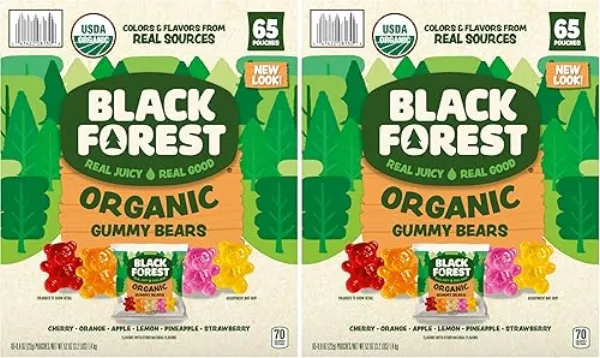
Black Forest
Black Forest Organic Gummy Bears
Pros
- Best price per ounce of any USDA Organic pectin gummy on the market
- 23,400 reviews with 4.6 stars — enormous consumer validation
- Available in virtually every grocery store nationwide
- Real fruit juice with no artificial colors, flavors, or preservatives
Cons
- Slightly softer texture than Surf Sweets — less defined chew
- Bears can clump together in the bag during warm weather
Black Forest Organic proves that pectin gummies do not need to be expensive to be good. At $0.87 per ounce, they undercut every other USDA Organic pectin gummy in this guide while delivering genuine fruit juice flavor and clean organic ingredients. The 23,400 Amazon reviews and 4.6-star average reflect a product that consistently meets expectations. The texture is slightly softer than Surf Sweets — less defined chew, more of a quick dissolve — but for everyday snacking and household bulk purchases, Black Forest is the rational choice for families who want pectin-based candy without the premium price tag.
SmartSweets
SmartSweets Gummy Bears
Pros
- 87% less sugar than traditional gummy bears — only 3g per bag
- Pectin-fiber base provides 28g soluble fiber with prebiotic benefits
- Best-selling better-for-you candy brand in North America
- 6 flavor varieties including Sour Blast Buddies and Peach Rings
Cons
- Noticeably firmer, drier texture than full-sugar pectin gummies
- High fiber content may cause bloating if consumed too quickly
SmartSweets represents the cutting edge of pectin candy formulation — a product that replaces sugar with allulose (a rare sugar absorbed but not metabolized by the body) while using a modified pectin-fiber matrix as the gelling system. The technical challenge is significant: traditional HM pectin requires high sugar content to gel, so SmartSweets uses a proprietary blend of modified pectin and soluble corn fiber that gels through a different mechanism. The result is a firmer, slightly drier gummy that delivers sweetness without the glycemic impact. For consumers managing diabetes, following keto or low-carb diets, or simply reducing sugar intake, SmartSweets is the pectin gummy that makes it possible.
Found Your Pectin Gummy?
Our #1 pick is Surf Sweets — USDA Organic pectin with the best texture and real fruit juice in the category.
Surf Sweets on Amazon →
Lovely Candy Co.
Lovely Candy Co. Gummy Bears
Pros
- Pectin-tapioca blend creates the most elastic, bouncy chew in the pectin category
- Closest texture approximation to gelatin gummies we have tested
- Natural colors and flavors with no artificial ingredients
- Good-sized 6 oz bag offers better value than single-serve options
Cons
- Not USDA Organic — uses conventional ingredients
- Less widely distributed than Surf Sweets or Black Forest
The secret to Lovely Candy's superior texture lies in their pectin-tapioca syrup blend. Tapioca starch creates a secondary gel network that fills the spaces between pectin chains, adding elasticity and bounce that pectin alone cannot achieve. This dual-gel approach mimics gelatin's stretch-and-return behavior more closely than any single-agent formulation. If texture is your primary concern — if you have been disappointed by the soft, mushy consistency of other pectin gummies — Lovely Candy is the brand most likely to satisfy your expectations. The natural fruit and vegetable colors are vibrant without synthetic dyes.
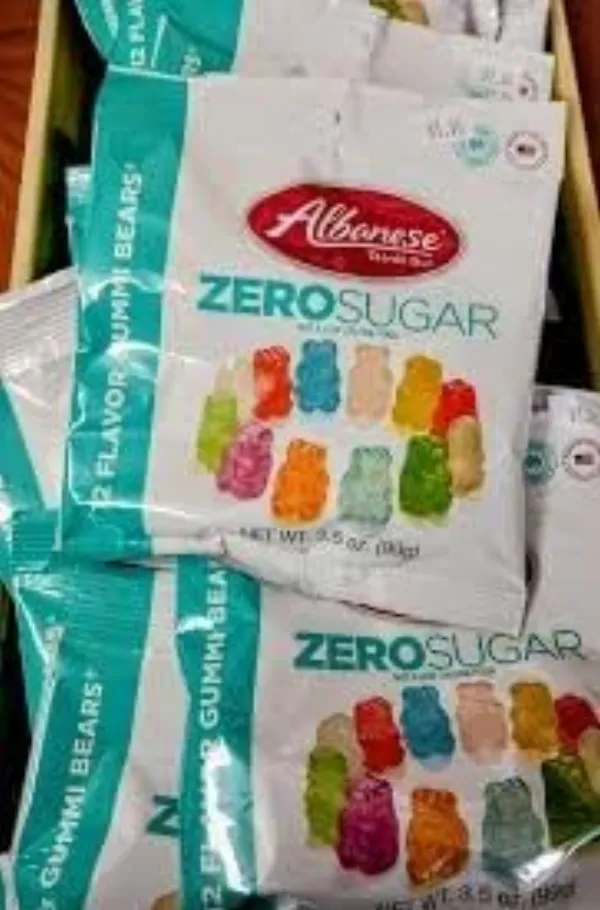
Project 7
Project 7 Gummy Bears
Pros
- Charitable mission — every purchase fights hunger, provides clean water, or supports education
- Low sugar at 4g per serving — better than most full-sugar pectin gummies
- Clean pectin-based formula with no artificial colors or flavors
- Available at Target, Whole Foods, and major online retailers
Cons
- Texture is softer and less satisfying than Surf Sweets or Lovely Candy
- Some reviewers note a slight aftertaste from plant-based sweeteners
Project 7 combines pectin-based candy with social impact, donating a portion of each sale to one of seven charitable causes including feeding the hungry, healing the sick, and housing the homeless. The gummy bears themselves are a competent pectin product — low sugar, plant-based, no artificial ingredients — with a softer texture that works well for consumers who prefer a gentler chew. For buyers who want their candy purchase to contribute to something beyond personal enjoyment, Project 7 delivers tangible social value alongside a genuinely decent pectin gummy.
How Pectin Gummies Are Made: The Factory Process
Understanding how pectin gummies are manufactured explains why they taste and feel the way they do — and why the manufacturing process matters for quality. Modern pectin gummy production uses a method called starch-mogul casting, a technique borrowed from traditional gelatin candy manufacturing but adapted for pectin's unique gelling requirements.
- Slurry preparation. Pectin powder is dry-mixed with a portion of the sugar to prevent clumping, then dissolved in hot water (175-195°F / 80-90°C) with constant stirring. The pectin must fully hydrate — any undissolved pectin particles create texture defects in the final product.
- Cooking. The pectin solution is combined with the remaining sugar, glucose syrup, and acid (citric or tartaric) and cooked to 225-240°F (107-116°C) to reach the target solids content (78-82% for gummy candy). Higher cooking temperatures produce firmer gummies.
- Flavor and color addition. After cooking, the mixture is cooled slightly (to approximately 195°F / 90°C) before adding natural flavors and colors. High temperatures would destroy volatile flavor compounds and degrade heat-sensitive natural pigments.
- Starch-mogul depositing. The hot pectin mixture is deposited into cavities stamped into trays of dry corn starch using a mogul machine. The starch absorbs moisture from the surface of the gummies, forming the characteristic matte finish and preventing sticking.
- Curing and drying. Trays are held in a conditioning room at controlled temperature and humidity for 24-72 hours. During this time, the pectin gel network fully sets, excess moisture migrates out, and the gummies develop their final texture. This step is critical — rushing it produces gummies that are too soft.
- Finishing. Cured gummies are tumbled to remove residual starch, then coated with a thin layer of carnauba wax or vegetable oil to prevent sticking in the bag. Some brands apply a sour coating (citric acid + sugar) at this stage. The finished gummies are then weighed, bagged, and sealed.
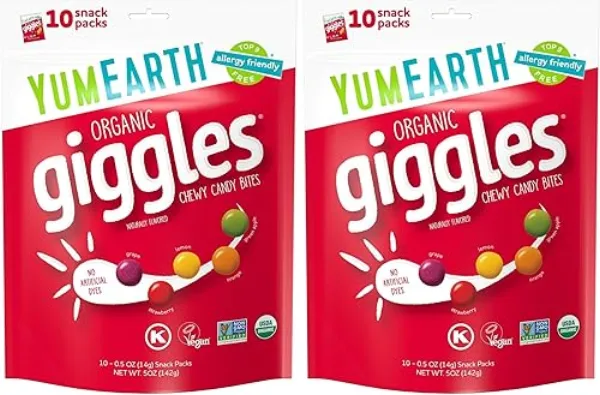
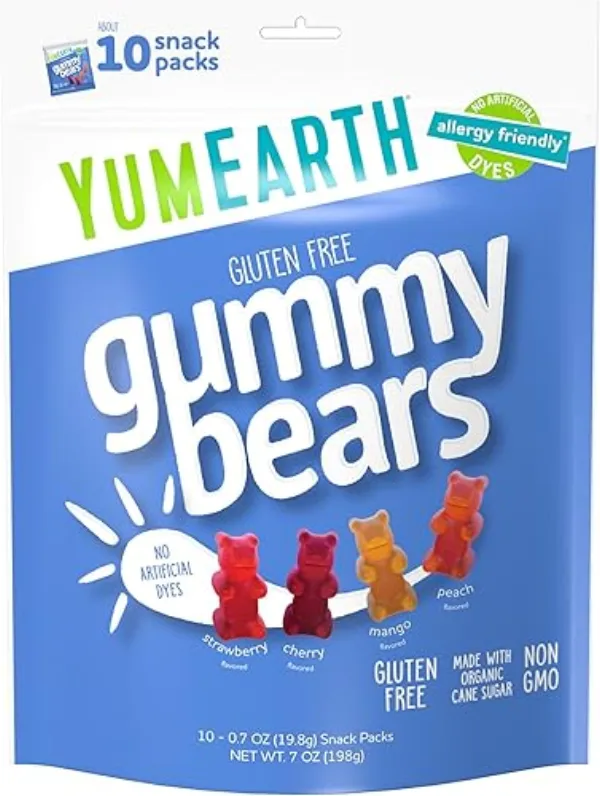
YumEarth
YumEarth Organic Fruit Snacks
Pros
- Allergen-free with USDA Organic — ideal for school environments
- Individual snack packs prevent overeating and fit in lunch boxes
- Natural vegetable-derived colors avoid synthetic dye concerns
- Soft, gentle texture that kids of all ages enjoy
Cons
- More "fruit snack" texture than "gummy bear" — very soft
- Higher per-ounce cost due to individual packaging
YumEarth uses a pectin-tapioca starch blend that creates a softer, more melt-in-mouth texture than pure pectin gummies. This makes them ideal for younger children who may find firm gummies difficult to chew safely. The organic certification extends to every ingredient, and the vegetable-derived colors (turmeric for yellow, purple carrot for violet, annatto for orange) avoid the synthetic dyes that some parents are concerned about due to links to hyperactivity in sensitive children. The individual snack-pack format adds convenience and portion control.
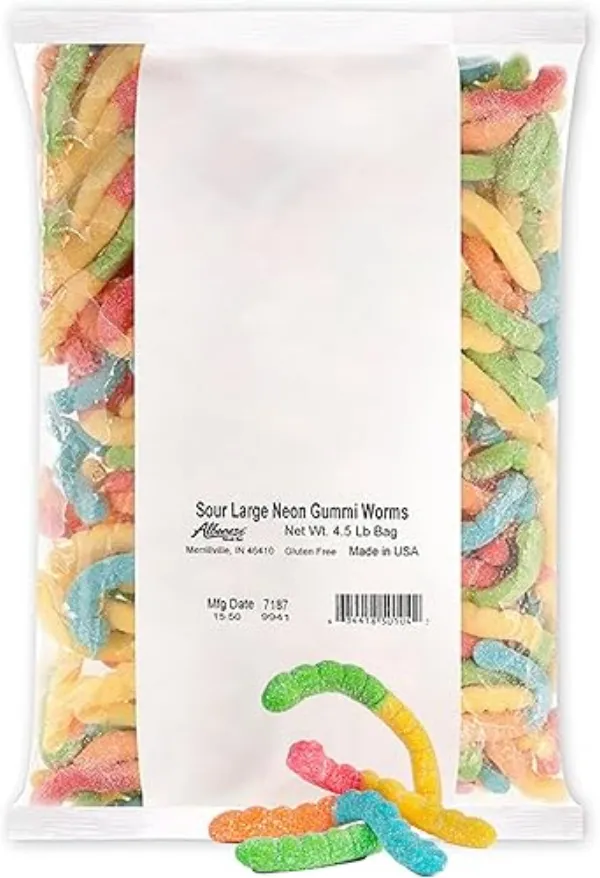
Surf Sweets
Surf Sweets Organic Sour Worms
Pros
- Best sour gummy made with pectin — excellent tangy-to-sweet ratio
- Same clean organic ingredients as Surf Sweets bears
- Citric acid coating enhances pectin's natural acid-gel synergy
- Fun worm shape that kids and adults enjoy
Cons
- Sour coating dissolves quickly — initial tang fades within 10-15 seconds
- Worms can stick together due to the citric acid coating
Pectin and sour are a natural pairing because pectin requires an acidic environment (pH 3.0-3.5) to gel properly. The citric acid coating on Surf Sweets Sour Worms actually reinforces the pectin gel structure at the surface while delivering that addictive pucker. The result is a sour gummy that hits the tongue with bright, citrusy tang before transitioning to the sweet organic fruit flavor beneath. For fans of sour candy who want a pectin-based option, this is the gold standard. See our full guide to vegan sour gummies for more sour candy options without gelatin.
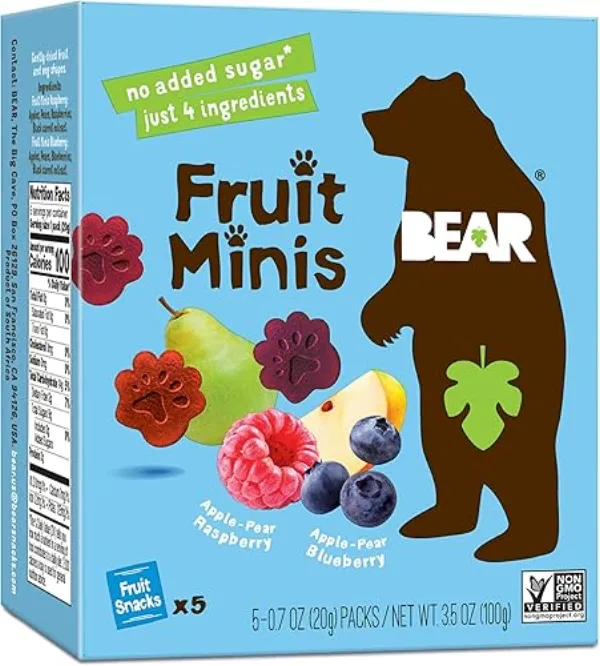
BEAR
BEAR Real Fruit Yoyos
Pros
- Ingredients: fruit. That is it. 100% real fruit with nothing else added
- Natural pectin from the fruit provides the chewy, gummy-like texture
- No added sugar, artificial colors, or preservatives
- Counts toward daily fruit servings — school-approved healthy snack
Cons
- Fruit leather format — not a traditional "gummy" shape or texture
- Higher sugar from concentrated fruit compared to low-sugar options
BEAR Yoyos take the pectin concept to its logical conclusion: the pectin comes from the fruit itself. The ingredient list is simply "fruit." No added pectin, no added sugar, no added anything. The natural pectin content of the concentrated fruit puree provides the chewy, gummy-adjacent texture. While technically a fruit leather rather than a gummy bear, BEAR Yoyos satisfy the same snacking impulse and represent the purest form of pectin-based candy possible. For parents who want the absolute cleanest option for their children, nothing beats a product with a one-word ingredient list.
Our Verdict
Surf Sweets Organic Fruity Bears earn our top recommendation as the best pectin gummy candy for the combination of texture quality, organic certification, real fruit juice, and allergen safety. Their nearly two decades of pectin formulation experience shows in every bite.
- Best overall pectin gummy: Surf Sweets — USDA Organic, best texture, real fruit juice, allergen-free
- Best value: Black Forest Organic — same organic quality at half the price, widest retail availability
- Best low-sugar: SmartSweets — 87% less sugar, pectin-fiber innovation, prebiotic benefits
- Best texture match to gelatin: Lovely Candy Co. — pectin-tapioca blend for maximum elasticity
- Best sour: Surf Sweets Sour Worms — citric acid + pectin synergy, organic, allergen-free
- Purest option: BEAR Yoyos — ingredient list: fruit. Nothing else.
Frequently Asked Questions About Pectin Gummy Candy
What is pectin and where does it come from?
Pectin is a polysaccharide found in all plant cell walls. Commercial pectin is extracted from citrus peels (~70% of production) and apple pomace (~25%) using hot acidified water. It is classified as HM (high-methoxyl, gels with sugar + acid) or LM (low-methoxyl, gels with calcium ions). Most gummy candy uses HM pectin.
Why do pectin gummies feel different from gelatin gummies?
Gelatin melts at body temperature, creating a gradual dissolve sensation. Pectin breaks through chewing force rather than melting, producing a cleaner, quicker "break" with faster flavor release. Modern pectin-starch blends have narrowed this texture gap significantly.
Is pectin healthier than gelatin?
In candy amounts, neither provides significant nutrition. Pectin is a soluble fiber; gelatin is a protein with glycine and proline. The real advantage of pectin is dietary compatibility — vegan, halal, and kosher friendly. Brands using pectin also tend to use cleaner overall ingredients.
Can you make pectin gummies at home?
Yes. Mix 1 cup fruit juice with 1/2 cup sugar, 3-4 tablespoons HM pectin powder, and 1/4 teaspoon citric acid. Heat until dissolved, boil 1 minute, pour into silicone molds, and refrigerate 2-4 hours. Homemade versions will be softer than commercial gummies.
Do pectin gummies expire faster than gelatin gummies?
Slightly. Pectin gummies last 9-14 months vs. 12-18 months for gelatin. Pectin is more susceptible to moisture migration and has a lower heat threshold. Store below 75°F in airtight containers for best shelf life.
Are pectin gummies better for the environment?
Yes. Pectin is extracted from agricultural waste (citrus peels, apple pomace), while gelatin requires animal farming. A 2022 life cycle assessment found pectin production generates 60-70% fewer greenhouse gas emissions per kilogram than gelatin production.
What is the difference between HM and LM pectin in gummies?
HM pectin (DE >50%) requires sugar and acid to gel — used in full-sugar gummies. LM pectin (DE <50%) gels with calcium ions — used in sugar-free and reduced-sugar gummies. HM produces firmer gels; LM produces softer, more fragile gels.
Why are pectin gummies more expensive than gelatin gummies?
Pectin costs $15-25/kg vs. $5-10/kg for gelatin due to more complex extraction. Pectin requires tighter manufacturing controls (temperature, pH). Brands using pectin also tend to invest in organic certification and premium ingredients, further increasing retail prices.
Explore More Candy Guides
Gelatin-free options, vegan sour candy, and the complete guide to plant-based sweets.
All Candy Guides →Related Articles
Best Gelatin-Free Gummy Candy
The complete guide to gummy candy without gelatin — pectin, agar, starch, and carrageenan options compared side by side.
Best Gelatin-Free Gummy Candy → CandyBest Vegan Sour Gummies
Sour candy without gelatin — pectin-based sour gummy worms, belts, and bears ranked by pucker intensity and flavor.
Best Vegan Sour Gummies → CandyBest Vegan Candy
15 vegan candy brands covering gummies, chocolate, sour candy, and fruit snacks — the complete plant-based candy guide.
Best Vegan Candy → CandyAre Swedish Fish Vegan?
Ingredient-level analysis of Swedish Fish — gelatin status, starch-based formula, and whether strict vegans can enjoy them.
Are Swedish Fish Vegan? →Looking for gummy vitamins instead of candy? See our comprehensive supplement guides for plant-based gummy vitamins, multivitamins, and functional supplements — all pectin-based and vegan-certified.
*The products reviewed on this page are candy and confectionery items, not dietary supplements. Nutritional claims are based on manufacturer-provided labels and may change without notice. Always check current packaging for the most up-to-date ingredient and allergen information. GummyGuide purchases all products independently and is not affiliated with any manufacturer. Some links are affiliate links — see our affiliate disclosure for details.
