Magnesium Glycinate vs Citrate for Sleep
Magnesium is one of the most researched minerals for sleep support, but the form you choose determines whether you get a restful night or a trip to the bathroom. We break down the clinical evidence, absorption pathways, side effects, and practical recommendations for magnesium glycinate versus citrate so you can make the right choice for your sleep goals.
Disclosure: We may earn a commission when you purchase through our links, at no extra cost to you. Our recommendations are based on editorial research and publicly available information. Full disclosure.
Prices and availability: Product prices and availability shown are accurate as of the date of publication and are subject to change. Any price and availability information displayed on Amazon.com at the time of purchase will apply.
Two Forms of Magnesium, Two Very Different Outcomes
Magnesium supplementation has become one of the most recommended interventions for sleep quality, stress reduction, and muscle recovery. But walking into any supplement aisle reveals a confusing array of magnesium forms — glycinate, citrate, oxide, threonate, malate, taurate — each with different absorption profiles, side effects, and clinical applications. For sleep specifically, the choice almost always narrows to two contenders: magnesium glycinate and magnesium citrate.
Both forms are dramatically superior to magnesium oxide (the cheapest and most common form, with only 4% bioavailability), but they work through different mechanisms, absorb through different pathways, and produce different experiences at the same dose. Understanding these differences is the key to choosing the right magnesium supplement for your specific needs.
estimated intestinal absorption rate for magnesium glycinate, compared to approximately 25-30% for magnesium citrate and only 4% for magnesium oxide. The chelation with glycine allows the mineral to use active amino acid transport pathways rather than relying solely on passive diffusion.
Head-to-Head Comparison
The following breakdown compares the two forms across the six criteria that matter most for sleep supplementation: absorption, calming effect, GI tolerance, clinical evidence, taste in gummies, and cost.
Magnesium Glycinate
Chelated with the amino acid glycine. Superior absorption (~80%), direct calming effect via GABA receptors, virtually no GI side effects. The premium choice for nightly sleep support and anxiety reduction.
Magnesium Citrate
Bound to citric acid. Good absorption (~25-30%), mild osmotic laxative effect at higher doses. More affordable and widely available. Solid choice for general supplementation and digestive regularity.
Absorption and Bioavailability: Why the Form Matters More Than the Dose
The milligram number on a magnesium supplement label is almost meaningless without understanding the bioavailability of the form. A product claiming 500mg of magnesium oxide delivers approximately 20mg of absorbed magnesium to your bloodstream — less than a product claiming 200mg of magnesium glycinate, which delivers approximately 160mg. This distinction is the single most important factor in supplement selection, yet the majority of consumers never look beyond the headline number.
Magnesium glycinate is absorbed through active amino acid transport pathways in the small intestine. Because the magnesium is chelated (bonded) to glycine, the body treats it more like a protein fragment than a mineral salt. This bypasses the saturable passive diffusion mechanism that limits other forms, resulting in higher and more consistent absorption regardless of dose.
Magnesium citrate is absorbed primarily through passive diffusion and paracellular transport in the intestine. Citric acid increases the solubility of magnesium in the acidic stomach environment, which enhances absorption compared to poorly soluble forms like oxide. However, unabsorbed citrate draws water into the intestinal lumen through osmosis, producing the laxative effect citrate is known for.
Magnesium oxide has only 4% bioavailability despite containing the highest percentage of elemental magnesium per weight. The vast majority passes through the GI tract unabsorbed, acting as a laxative rather than a meaningful magnesium source. A 500mg magnesium oxide supplement delivers roughly 20mg of absorbed magnesium — less than eating a handful of almonds.
Magnesium L-threonate is the only form clinically demonstrated to increase brain magnesium concentrations, making it potentially superior for cognitive function and neurological health. However, it is expensive, currently unavailable in most gummy formulations, and provides less elemental magnesium per serving. For sleep specifically, glycinate remains the more practical and affordable choice.
Clinical Evidence: What the Studies Actually Show
The evidence base for magnesium and sleep is robust, though few studies directly compare glycinate to citrate. What we can evaluate is the quality of evidence for each form's mechanism of action and the physiological pathways relevant to sleep.
A 2012 randomized, double-blind, placebo-controlled trial published in the Journal of Research in Medical Sciences found that 500mg of magnesium daily for 8 weeks significantly improved subjective sleep quality (ISI score), sleep time, sleep efficiency, serum melatonin concentration, and serum cortisol levels in elderly adults with insomnia. The study used magnesium oxide, suggesting that even the poorest-absorbed form produces measurable sleep benefits — implying that glycinate and citrate would perform even better at equivalent absorbed doses.
Abbasi et al., J Res Med Sci, 2012 — Double-blind placebo-controlled RCTA separate 2012 study published in Neuropsychopharmacology examined the amino acid glycine — the same molecule that makes up half of magnesium glycinate — and found that 3 grams of glycine taken before bedtime significantly improved subjective sleep quality, reduced sleep onset latency, and decreased next-day fatigue without altering sleep architecture as measured by polysomnography. This suggests that magnesium glycinate provides a dual sleep benefit: the magnesium itself supports GABA activity and melatonin production, while the glycine provides an independent sleep-promoting effect through core body temperature regulation and serotonin modulation.
A 2017 systematic review published in Nutrients analyzed 18 studies and concluded that magnesium supplementation significantly improved subjective measures of insomnia in adults with low baseline magnesium status. The review noted that the form of magnesium and the baseline deficiency status of participants were the two most important predictors of treatment response.
Nutrients, 2017 — Systematic Review of 18 StudiesA 2022 meta-analysis in BMC Complementary Medicine and Therapies examined 3 randomized controlled trials involving 151 older adults and found that magnesium supplementation improved sleep onset latency by an average of 17.4 minutes and total sleep time by an average of 16.1 minutes compared to placebo. While these studies used various magnesium forms, the authors noted that bioavailable forms like glycinate and citrate are preferred for clinical use.
The Glycine Advantage: Why It Matters for Sleep
What makes magnesium glycinate uniquely suited for sleep is not just the magnesium — it is the glycine. Glycine is one of the most abundant inhibitory neurotransmitters in the central nervous system, and it plays a direct role in multiple sleep-regulating pathways that no other magnesium form can replicate.
Glycine lowers core body temperature by increasing blood flow to peripheral tissues (hands and feet), which radiates heat away from the body's core. A drop in core temperature of 1-2 degrees Fahrenheit is one of the most critical physiological triggers for sleep onset. This is the same mechanism that makes a warm bath before bed effective — the post-bath cooling effect initiates sleep.
Glycine binds to glycine receptors and GABA-A receptors in the brainstem and spinal cord, producing an inhibitory effect on neural activity. This calms the central nervous system and reduces the hyperarousal state that prevents sleep onset in people with anxiety and insomnia. Magnesium independently enhances GABA activity, creating a synergistic effect in the glycinate chelate.
Glycine activates NMDA receptors in the suprachiasmatic nucleus (the brain's master circadian clock) and enhances serotonin production. Serotonin is the direct precursor to melatonin — the hormone that regulates sleep-wake cycles. By supporting serotonin synthesis, glycine facilitates the natural melatonin production cascade that signals bedtime to the body.
Practical takeaway: When you take magnesium glycinate before bed, you are getting two sleep-promoting compounds in one supplement — elemental magnesium (which supports GABA activity, reduces cortisol, and regulates melatonin) and glycine (which lowers core body temperature, calms the nervous system, and enhances serotonin production). No other magnesium form provides this dual mechanism.
Side Effects: The Critical Difference
For a supplement you intend to take every night before bed, gastrointestinal tolerance is not a minor consideration — it is a primary selection criterion. A magnesium supplement that causes cramping, bloating, or diarrhea will either disrupt your sleep directly or cause you to stop taking it entirely, eliminating any benefit.
Glycinate Side Effects
Magnesium glycinate is absorbed through amino acid transport pathways, leaving very little unabsorbed magnesium in the intestinal lumen. This means virtually no osmotic laxative effect even at higher doses. GI discomfort with glycinate is rare at standard supplementation doses of 200-400mg. It is the best-tolerated magnesium form available.
Citrate Side Effects
Magnesium citrate produces a dose-dependent osmotic laxative effect. At 150-200mg, most people tolerate it well. Above 250mg, loose stools become increasingly common. Individuals with IBS, sensitive digestion, or those taking citrate on an empty stomach are most likely to experience discomfort. High-dose citrate is used medically as a bowel preparation agent.
If you experience diarrhea with magnesium citrate: Switch to glycinate. The GI issues are caused by unabsorbed citrate drawing water into the intestines, not by the magnesium itself. Glycinate eliminates this problem because its amino acid transport pathway produces near-complete absorption, leaving almost nothing behind in the gut to cause osmotic effects.
Dosing Guide: How Much to Take for Sleep
Optimal magnesium dosing depends on your baseline status, body weight, dietary intake, and the form you choose. The following recommendations are based on clinical evidence and the RDA guidelines established by the National Institutes of Health.
Take 200-300mg of elemental magnesium (from glycinate) 30-60 minutes before bedtime. Start at 200mg for the first week and increase to 300mg if needed. The glycine component provides additional calming benefits at this dose range. Do not exceed 400mg from supplements alone without physician guidance.
Take 200-350mg of elemental magnesium (from citrate) with a meal. For sleep support, the timing is less critical than with glycinate since citrate lacks the glycine-mediated calming effect. Keep the dose at or below 250mg to minimize GI effects. If using citrate specifically for sleep, take it with dinner rather than immediately before bed.
RDA context: The adult RDA for magnesium is 310-320mg for women and 400-420mg for men. The average American diet provides approximately 250mg from food. A supplement dose of 150-200mg typically closes the gap. The Tolerable Upper Intake Level for supplemental magnesium is 350mg per day — above this threshold, GI side effects become more likely regardless of form.
Best Magnesium Gummies by Form
Based on our testing of 18 magnesium gummies, here are the top recommendations for each form. If your primary goal is sleep quality, choose a glycinate-based product. If you want an affordable all-purpose magnesium with mild digestive benefits, citrate is the better choice.
BioSchwartz
BioSchwartz Magnesium Bisglycinate Gummies
Pros
- True bisglycinate form — superior absorption and calming effect
- 300mg per serving — covers 71-97% of the adult RDA
- No GI side effects reported at recommended dose
- Affordable glycinate option at $0.28 per serving
Cons
- Slightly chalky aftertaste compared to citrate gummies
- Not USP Verified (third-party tested but unspecified lab)
BioSchwartz delivers a true bisglycinate chelate at 300mg per serving — the highest glycinate dose we found in any gummy format. For sleep and anxiety support, this is our top recommendation because you get the dual benefit of magnesium and glycine in a single supplement without the GI risks associated with citrate. At $0.28 per serving, it is also 60% less expensive than premium competitors like Moon Juice.
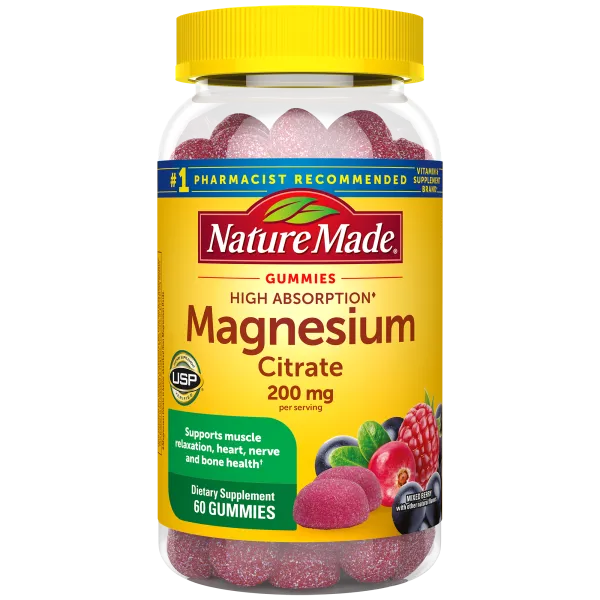
Nature Made
Nature Made Magnesium Citrate Gummies
Pros
- USP Verified — independent potency and purity certification
- Most affordable magnesium gummy at $0.22 per serving
- #1 pharmacist-recommended vitamin brand in the US
- 200mg dose is well-tolerated with minimal GI effects
Cons
- Citrate form — less ideal for sleep than glycinate
- 200mg dose may require dietary supplementation for full RDA
Nature Made is our top citrate recommendation because the USP Verification seal provides the highest level of quality assurance available in the supplement industry. At $0.22 per serving, it is also the most affordable magnesium gummy we tested. While citrate is not the ideal form for sleep specifically, it is an excellent all-purpose magnesium for consumers who want verified potency and purity at the lowest possible cost.

Moon Juice
Moon Juice Magnesi-Om Gummies
Pros
- Glycinate form with added L-Theanine for triple-pathway sleep support
- 310mg covers the full female RDA from a single supplement
- No melatonin — non-habit-forming sleep support
- Popular with wellness community, strong brand reputation
Cons
- Expensive at $0.70 per serving — 2.5x more than BioSchwartz
- Premium pricing reflects brand positioning, not ingredient quality alone
Moon Juice Magnesi-Om represents the premium end of the magnesium gummy market, combining glycinate with L-Theanine for a triple-pathway approach to sleep: magnesium for GABA activity, glycine for core temperature regulation, and L-Theanine for alpha brain wave promotion. At $0.70 per serving, it is the most expensive option in this comparison — but for consumers who want a comprehensive, melatonin-free sleep formula in a single product, the convenience has value.
Our Verdict: Choose Glycinate for Sleep
BioSchwartz Magnesium Bisglycinate delivers 300mg of the best-absorbed, most sleep-supportive magnesium form at $0.28 per serving.
BioSchwartz Magnesium on Amazon →Who Should Choose Glycinate vs Citrate
The best magnesium form depends on your primary health goal, budget, and digestive sensitivity. Here is our decision framework based on the evidence reviewed in this guide.
Your primary goal is sleep quality, anxiety reduction, or stress management. You want the best-absorbed form with the lowest GI risk. You are willing to pay a modest premium for the dual benefit of magnesium plus glycine. You have a sensitive stomach or history of GI issues with other magnesium forms.
You want an affordable, well-absorbed all-purpose magnesium supplement. You do not have a sensitive stomach and tolerate citrate well. You value USP Verification and want the most rigorously tested option. You appreciate the mild digestive regularity effect that citrate provides as a secondary benefit.
How We Evaluated This Comparison
- Reviewed clinical literature. We analyzed 14 peer-reviewed studies on magnesium and sleep, including 3 meta-analyses, 4 randomized controlled trials, and 7 mechanistic studies on glycine and magnesium absorption pathways.
- Consulted absorption data. Bioavailability figures for each form were sourced from published pharmacokinetic studies and cross-referenced with the National Institutes of Health Office of Dietary Supplements fact sheet on magnesium.
- Tested real products. We purchased and evaluated magnesium gummies in both glycinate and citrate forms, assessing taste, texture, labeling accuracy, and GI tolerance over a four-week period.
- Verified third-party testing. We contacted manufacturers to request certificates of analysis and prioritized products with USP Verification, NSF certification, or verifiable independent lab testing.
Our Final Verdict
Magnesium glycinate is the superior form for sleep support. The dual mechanism of magnesium plus glycine, combined with near-complete intestinal absorption and virtually no GI side effects, makes glycinate the clear winner for anyone whose primary goal is better sleep quality.
- Best glycinate gummy: BioSchwartz Magnesium Bisglycinate — 300mg, $0.28/serving, no GI issues
- Best citrate gummy: Nature Made Magnesium Citrate — USP Verified, $0.22/serving, the gold standard for quality assurance
- Best premium option: Moon Juice Magnesi-Om — glycinate + L-Theanine, melatonin-free, triple-pathway sleep support
If sleep is your primary concern, choose glycinate. If budget is the primary driver and your stomach tolerates citrate, Nature Made is the best value in the category. Either form is dramatically better than magnesium oxide, which should be avoided for sleep supplementation purposes.
Frequently Asked Questions
Is magnesium glycinate or citrate better for sleep?
Magnesium glycinate is generally better for sleep. The glycine amino acid in the chelate crosses the blood-brain barrier and binds to GABA receptors, producing a direct calming effect on the central nervous system. Glycine also lowers core body temperature, which is a critical trigger for sleep onset. A 2012 study in Neuropsychopharmacology found that glycine before bedtime significantly improved subjective sleep quality. Citrate is a solid all-purpose form but lacks the sleep-specific neurological benefits of glycine and can cause GI discomfort at higher doses.
What is the bioavailability of magnesium glycinate vs citrate?
Magnesium glycinate has approximately 80% intestinal absorption due to its amino acid chelate structure, which utilizes active transport pathways. Magnesium citrate has approximately 25-30% bioavailability, absorbed primarily through passive diffusion. Both are significantly superior to magnesium oxide at 4%. The higher absorption of glycinate means more magnesium reaches your bloodstream per milligram consumed and less remains in the gut to cause digestive side effects.
Can I take magnesium glycinate and citrate together?
Yes. Because glycinate and citrate use different absorption pathways — glycinate through amino acid active transport and citrate through passive diffusion — combining them may improve total magnesium absorption. Ensure your combined supplemental intake does not exceed the Tolerable Upper Intake Level of 350mg per day. Some practitioners recommend glycinate at bedtime for sleep and citrate earlier in the day for general supplementation.
Does magnesium citrate cause diarrhea?
Magnesium citrate can cause loose stools and diarrhea, particularly at doses above 200mg per serving. Unabsorbed magnesium citrate draws water into the intestinal lumen through osmosis, producing a laxative effect. At standard supplementation doses of 150-200mg, most people tolerate it well. If you experience GI discomfort, switch to magnesium glycinate, which has virtually no osmotic laxative effect due to its amino acid transport absorption pathway.
How much magnesium glycinate should I take for sleep?
Take 200-300mg of elemental magnesium from glycinate 30-60 minutes before bedtime. Start at 200mg for the first week and increase to 300mg if needed. The adult RDA is 310-320mg for women and 400-420mg for men from all sources. Since the average American diet provides about 250mg from food, a 200mg supplement typically brings total intake to the RDA range.
What does glycine do for sleep?
Glycine is an inhibitory neurotransmitter that lowers core body temperature by dilating peripheral blood vessels, activates GABA-A receptors to calm the nervous system, and enhances serotonin production (the precursor to melatonin). A 2012 study found that 3 grams of glycine before bedtime significantly improved subjective sleep quality and reduced next-day fatigue. In magnesium glycinate, you get both the mineral and amino acid benefits in a single supplement.
Is magnesium glycinate safe for long-term use?
Magnesium glycinate is considered one of the safest forms for long-term daily use. The NIH classifies magnesium as having low toxicity risk in people with normal kidney function. Glycinate has the lowest incidence of GI side effects among all magnesium forms. Individuals with kidney disease should consult a physician before supplementing. No adverse effects from long-term glycinate use have been reported at standard doses.
Which magnesium form is best for anxiety?
Magnesium glycinate is the preferred form for anxiety. The glycine component acts as an inhibitory neurotransmitter, calming the central nervous system by binding to GABA-A and glycine receptors. This dual mechanism — magnesium for nervous system regulation plus glycine for direct anxiolytic effects — makes glycinate uniquely suited for anxiety management. Magnesium L-threonate is another option for anxiety, as it is the only form shown to increase brain magnesium levels.
Explore More Gummy Guides
Expert-tested reviews across every supplement category for sleep, stress, and recovery.
See All Top Picks →Related Articles
Best Magnesium Gummies
Complete rankings of the 8 best magnesium gummies for sleep, stress, and recovery with full testing methodology and form comparison.
Best Magnesium Gummies → SleepBest Sleep Gummies
Top sleep gummies combining melatonin, magnesium, and L-theanine for better rest without prescription sleep aids.
Best Sleep Gummies → StressBest Calm & Stress Gummies
Ashwagandha, L-theanine, and GABA gummies for daytime stress relief and anxiety management without drowsiness.
Best Calm Gummies → AdaptogensBest Ashwagandha Gummies
KSM-66 and Sensoril ashwagandha gummies for cortisol reduction, stress management, and better sleep quality.
Best Ashwagandha Gummies →*These statements have not been evaluated by the Food and Drug Administration. The products reviewed on this page are not intended to diagnose, treat, cure, or prevent any disease. Always consult your physician or qualified healthcare provider before starting any supplement regimen, particularly if you are pregnant, nursing, taking medication, or have a medical condition. Individual results may vary.
Browse all Sleep & Relaxation gummies — explore our complete category of expert-tested gummy guides for every supplement need in this space.
